India's Drone Didis Take To The Skies, Revolutionise Farming With Technology & Financial Independence
· Free Press Journal
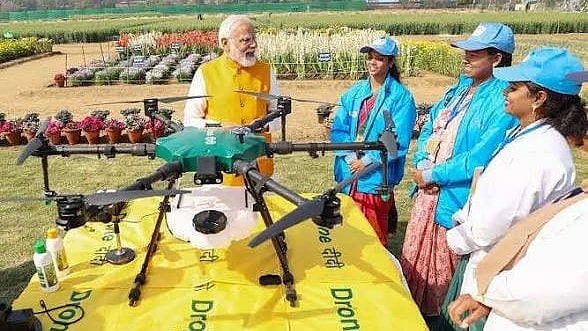
New Delhi, Nov 19: Women trained under India's 'Namo Drone Didi' initiative are increasingly using agricultural drones to modernise farming practices, earn more income, improve resource efficiency and challenge traditional gender norms in rural areas, a new report has said.
Visit sportbet.rodeo for more information.
The report from Tanzania-based IPP Media's The Guardian said the programme is creating a new cadre of rural women drone pilots, known as "Drone Didis", who provide services such as spraying fertilisers, pesticides and liquid nutrients using drones, reducing the physical labour traditionally required in crop management.
Namo Drone Didis are demonstrating how advanced technology can be effectively used in villages. https://t.co/ASbNPzrbvu
— PMO India (@PMOIndia) November 12, 2026
Farmers previously had to walk through dense crops carrying heavy tanks, consuming exhausting physical effort and vast quantities of water.
GTA VI’s Lucia Caminos: Prison Past, Big Ambitions And A Partnership With Jason DuvalDrone Didis Transform Rural Farming
‘Drone Didis’ is a "title blending modern aviation with Didi, the respectful and affectionate Hindi word for elder sister, used across rural India to honour women who lead, mentor, and uplift their communities," the report said.
By replacing manual spraying with precision aerial application, the technology enables faster coverage, more uniform application and effective resource consumption.
"Men who once insisted women remain confined to domestic chores now look to them as role models for their own daughters and wives. By uniting traditional ecological wisdom with cutting-edge aviation technology in the hands of rural women, India is proving that the future of its agriculture, and its social progress, belongs to those bold enough to claim the open sky," the report noted.
Also Watch:
Women Challenge Traditional Gender Stereotypes
Similarly, Sabina Khatoon from Bihar and Rekha Devi from Agra also defied gender-based stereotyping as many villagers felt that flying machinery was "a man’s job."
The Namo Drone Didi model, based in village Self-Help Groups (SHGs), encourages trained pilots to train other women. Sabina has already trained 80 women farmers, while Rekha collaborates with 15 of the 20 women’s groups in her village.
Level up your brain the fun way. Play daily games and quizzes on FPJ Smart!
(Except for the headline, this article has not been edited by FPJ's editorial team and is auto-generated from an agency feed.)