From Empire To Earthshot: How Bombay And Mumbai Have Received British Royals, With Ceremony, Curiosity And Resistance
· Free Press Journal
I must have been about ten when a family friend gifted me a set of playing cards featuring Prince Charles and Lady Diana. I remember their faces more clearly than the games we played with those cards: a young Charles and the strikingly beautiful Diana.
Visit newsbetting.club for more information.
I was growing up in Baroda, Gujarat, where the Gaekwads, the former ruling family, remained a familiar presence in the city’s affections and conversations. Royalty carried a certain fascination. As a child, I neither understood it particularly well nor felt the need to question it.
That came later. Studying history meant studying colonialism, the freedom struggle and the power behind the portraits. Yet those playing cards stayed with me, a childhood memory that acquired more complicated associations with age.
With Prince William and Catherine, the Prince and Princess of Wales, in Mumbai for the Earthshot Prize, I found myself remembering that set. It also sent me looking into the royal family’s connections with this city: who visited Bombay, as it was then called, and later Mumbai? What brought them here, and how were they received?
This history follows their visits to Bombay and Mumbai, from imperial receptions and a nationalist boycott to film studios, dabbawalas and Earthshot. The royal lineage connects these visits; the city’s relationship with its visitors has changed.
British royal visits to Bombay, 1870–1921: imperial ceremonies, civic landmarks and a welcome challenged by nationalist resistance.1870 and 1875: Royal arrivals and civic ambition
Prince Alfred, Duke of Edinburgh and Queen Victoria’s second son, visited Bombay in 1870. His name became attached to the Royal Alfred Sailors’ Home, an institution intended to provide accommodation for visiting seamen and protect them from exploitation ashore.
The Bombay Gazetteer records that Alfred laid a foundation stone for the proposed home on March 17, 1870. The project subsequently moved to a site near Apollo Bunder, where construction took place between 1872 and 1876. Khanderao Gaekwad of Baroda was its principal donor.
Alfred’s elder brother, Albert Edward, Prince of Wales and the future Edward VII, arrived in Bombay on November 8, 1875. The city was the first stop on his extensive subcontinental tour. Photographs preserved by the Royal Collection record the arrival, while other material documents the formal meetings with Indian rulers that formed part of the visit.
An artist’s impression of a ceremonial arrival at Bombay harbour in the nineteenth century. AI-generated representative illustration; not an archival image.Bombay’s municipal welcome invoked the island’s association with Charles II’s marriage to Catherine of Braganza and expressed gratitude for British rule. This was the position of its official representatives, rather than evidence of universal public loyalty.
Across the harbour, Elephanta also became a setting for royal hospitality. Both Alfred and Albert Edward were entertained there during their visits. Research published in Modern Asian Studies examines how these occasions used the caves to assert imperial legitimacy, even as ceremonial arrangements took precedence over concern for the monument. An excursion that might appear merely picturesque was part of the political work of the tour.
Elephanta’s caves became a setting for royal hospitality during nineteenth-century visits to Bombay.1905 and 1911: The visit behind the Gateway
George and Mary first visited Bombay in 1905 as Prince and Princess of Wales. Their programme included a proposed excursion to Elephanta, although it was cancelled. When they returned on December 2, 1911, they came as King George V and Queen Mary, ahead of the Delhi Durbar.
The second visit gave Bombay its most recognisable royal commemoration: the Gateway of India. George and Mary did not step ashore beneath the completed Gateway. Built to commemorate their visit, the monument was completed in 1924.
Royal appearances made distant imperial authority visible. Bombay also had a particular advantage as a harbour city. It could receive the visitors at the beginning of their Indian journey, allowing civic leaders to present it as both an entrance to the country and an important city in its own right.
The Gateway of India was built to commemorate King George V and Queen Mary’s 1911 visit to Bombay. It was completed in 1924.1921: When the welcome became a boycott
On November 17, 1921, Edward, Prince of Wales and the future Edward VIII, arrived in a city where the royal welcome was fiercely contested.
Gandhi’s Non-Cooperation Movement had made the visit a focus of protest. A hartal was called for the day of the landing. At the Elphinstone Mill compound, Gandhi addressed a gathering and lit a bonfire of foreign cloth. Mani Bhavan’s chronology records the meeting and the outbreak of riots following the prince’s arrival.
Violence continued from November 17 to 20. Historian Dinyar Patel’s study of the Prince of Wales riots describes Hindu and Muslim supporters of the Non-Cooperation and Khilafat movements attacking minorities perceived as loyal to the British, particularly Parsis, amid anger over violations of the hartal.
An artist’s impression evoking the hartal during the Prince of Wales’s Bombay visit in November 1921The episode exposed divisions within Bombay as well as opposition to colonial rule. Residents were targeted over their perceived loyalties. The prospect of a mass nationalist movement raised urgent questions for smaller communities about their security and freedom to disagree.
Patel also examines Gandhi’s subsequent efforts to reassure Parsis and repair relations with the community. The violence forced him to confront the place of minorities within the movement he led
British royal visits to Bombay and Mumbai, 1961–2003: from Queen Elizabeth II’s state visit to Prince Charles’s encounters with cinema and the dabbawalas.1961: A queen visits an independent republic
Queen Elizabeth II and Prince Philip’s visit to Bombay in 1961 took place within a fundamentally different relationship. India was an independent republic. Elizabeth came as a foreign head of state.
Bombay was among the stops on their first state visit to India. On February 24, the Queen visited the Atomic Energy Centre at Trombay. A photograph of that engagement was among the archival images the Indian government presented to her in 2015.
At Trombay, independent India was presenting its scientific ambitions. Royal ceremony continued, but receiving the Queen no longer implied allegiance to her. India’s government chose its diplomatic relationships while pursuing its own policies and development priorities.
1980: Charles meets Bombay cinema
Prince Charles’s November 1980 visit to Rajkamal Kalamandir produced a photograph that would outlast much of the official itinerary.
Actor Padmini Kolhapure greeted him with a kiss on the cheek. Contemporary photographic captions date the encounter to November 1980, although a different year appears in some subsequent accounts.
The moment also offered something formal receptions rarely could: a greeting that appeared to interrupt the expected royal script. Decades later, it remains a familiar reference in accounts of Charles’s visits to India.
Padmini Kolhapure greets Prince Charles with a kiss on the cheek during his visit to Rajkamal Kalamandir studio in Bombay, November 1980.2003: Twenty minutes with the dabbawalas
On November 4, 2003, Charles met Mumbai’s dabbawalas near Churchgate. A contemporary report records that he spent about 20 minutes with the workers and was shown their lunch-box sorting system on the footpath outside the railway headquarters.
Prince Charles meets Mumbai’s dabbawalas near Churchgate in 2003.The engagement brought international attention to an everyday service built around collecting and delivering meals across the city.
The association continued after the visit. Ahead of Charles and Camilla’s wedding in 2005, the dabbawalas arranged gifts including a traditional turban, a sari and Kolhapuri sandals. The brief meeting had become a connection they chose to celebrate.
British royal visits to Mumbai, 2013–2026: charity, cinema, sport, youth development and climate action.2013 and 2016: Remembrance, charity and cinema
Charles returned with Camilla, then Duchess of Cornwall, in November 2013. Their Mumbai engagements included a Bollywood charity dinner, while Charles visited Haji Ali and viewed restoration work.
At the Taj Mahal Palace, he laid a wreath in memory of those killed in the November 2008 attacks and met hotel chefs who had survived the violence.
Remembrance was also part of William and Catherine’s April 2016 visit as Duke and Duchess of Cambridge. They laid a wreath at the Taj’s memorial to the attack victims before a programme that included cricket with children at Oval Maidan, a visit to Banganga and a charity gala with film personalities. They also met young entrepreneurs before leaving Mumbai.
Members of the British royal family2023 and 2025: Visits beyond the major tours
Princess Anne attended the International Olympic Committee’s 141st Session in Mumbai in October 2023. Prince Edward, Duke of Edinburgh, met Maharashtra’s governor at Raj Bhavan on February 2, 2025, discussing opportunities for closer collaboration between India and Britain.
2026: Earthshot brings the royals back
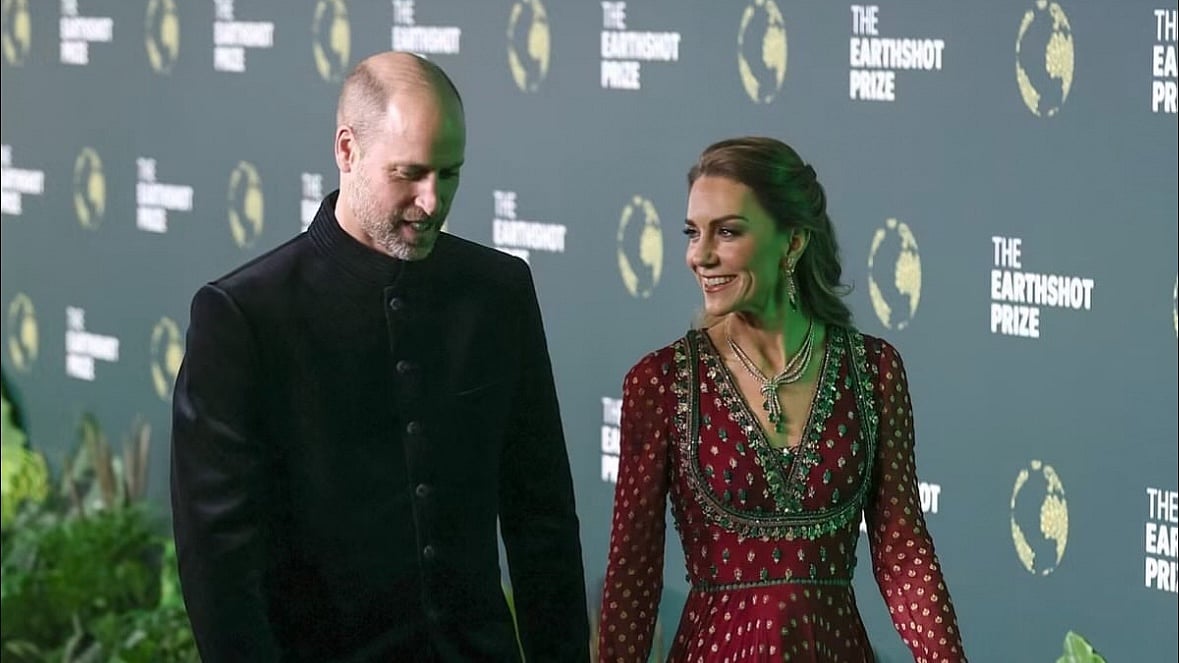
William and Catherine’s latest visit included street cricket at Ballard Estate, a Metro engagement and the Earthshot Impact Assembly. The British High Commission described the programme as focusing on innovation, sustainability and youth leadership, alongside connections through cricket, fashion and cinema.
Prince William & Kate Middleton At Mumbai Earthshot AwardsOn November 17, Mumbai hosted the sixth Earthshot Prize awards ceremony. Five winners were each awarded £1 million to expand their environmental solutions. Among them was India’s Mahindra Last Mile Mobility, recognised in the Clean Our Air category for its work on electric transport.
Prince William and Kate Middleton During Mumbai OutingFrom Elephanta’s imperial hospitality to Trombay’s scientific ambitions and Churchgate’s lunch boxes, each itinerary presented a particular view of the city.
The Gateway remains the most conspicuous reminder of a royal visit. The violence of 1921 belongs just as firmly to that history. Bombay and Mumbai have received British royalty with ceremony, curiosity and resistance, sometimes within the same visit.
(Sources: Bombay Gazetteer; Royal Collection Trust; Modern Asian Studies; Dinyar Patel’s research in The Indian Economic & Social History Review; Mani Bhavan Gandhi Sangrahalaya; Press Information Bureau; contemporary reporting by Rediff and ITV News; official Royal Family, Maharashtra Raj Bhavan, British High Commission and Earthshot Prize records.)
Level up your brain the fun way. Play daily games and quizzes on FPJ Smart!