Republican Panic Sets In Over Prospects of a Massive Blue Wave
· Time
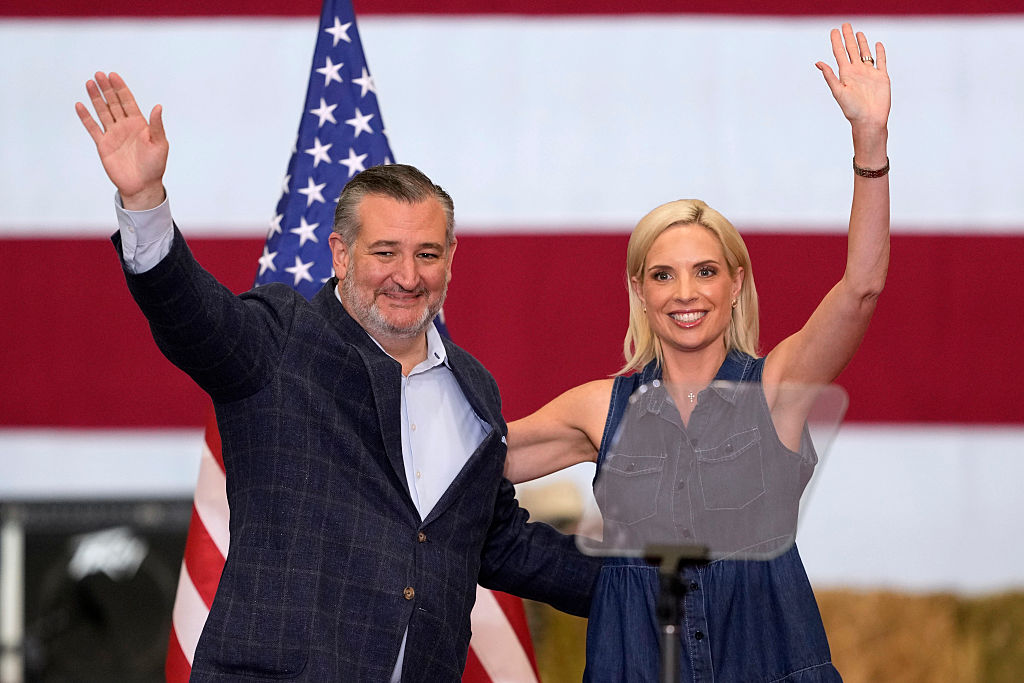
With less than six weeks to go until Election Day, the sentiment among Republicans is shifting from nervous to fatalistic, as a pileup of bad news has many convinced they are heading toward an electoral disaster.
Visit afnews.co.za for more information.
The warning signs are coming in quickly from across the map—much on it from red states where President Trump won comfortably just two years ago. Outside groups backing the GOP are now spending in the millions on Senate races in once-safe territories like Nebraska and Kansas; South Carolina, Mississippi, South Dakota, and Arkansas are all drawing renewed attention amid fears of a historically massive blue wave.
At a closed-door briefing on Wednesday with his caucus, Republican Sen. Tim Scott of South Carolina delivered a particularly grim message: 2026 is not going to look anything like 2024. As leader of the National Republican Senatorial Committee, Senate Republicans’ official campaign arm, Scott is tasked with deciding how to dole out a sizable warchest in the final weeks of the midterms. To wit, he told his fellow Republican Senators that the NRSC’s top priorities are now almost entirely defense, as they scramble to avoid losing GOP-held seats in Texas, Iowa, Maine, and Alaska. They are also still investing to flip Democratic seats in Michigan and New Hampshire—where some recent polls show Democrats Abdul El-Sayed and Chris Pappas with small leads over Republicans Mike Rogers and John E. Sununu.
Notably absent from this plan were North Carolina and Georgia—two Senate seats Republicans were touting as major targets last year. Now some are writing those off as all but won by Democrats Roy Cooper and Jon Ossoff. An operative familiar with Scott’s thinking stressed that the NRSC’s strategy remains fluid until Election Day and noted that outside groups could still step in to back up their candidates in those states.
A day earlier in Iowa, which Trump won in 2024 by 13 points, state lawmakers received an even starker warning. Radio host Steve Deace, a real player in conservative circles there and a loyal Trump ally, told his followers on Wednesday afternoon that “Iowa House Republicans were informed by their own pollsters that if you are in a +15 district you’re within the margin for error, if you’re in a +10 district you’re underwater, and that this might end being an even worse midterm environment than 2006.”
Iowa Republicans on the ballot are not being subtle about their efforts to put some distance between their fortunes and the MAGA Movement. Rep. Zach Nunn voted last week to curb Trump’s deeply unpopular war against Iran—a month after campaigning with Defense Secretary Pete Hegseth, who is running that war. Rep. Ashley Hinson, the GOP nominee for the open Senate seat, is running ads touting her work with Democrats, not her endorsement from Trump.
As Deace noted, “If the environment is this bad in my home state, where Trump has been the most popular political figure over the last decade, I can’t imagine where it is everywhere else.”
There’s similar scrambling in Texas, where a super PAC blessed by Senate Majority Leader John Thune is now on track to spend more than $100 million, an add on of $35 million to the $65 million the group had already booked in advertising to boost Ken Paxton’s bid against James Talarico. The total price tag for keeping the Senate seat is on track to approach $200 million just on the GOP side.
It’s little better for House Republicans. Between their official campaign arm, allied outside organizations, and the candidates themselves, there is a massive $485 million well of ad reservations between Aug. 1 and Election Day—and that’s just in districts Trump won, according to a Politico analysis.
Even Speaker Mike Johnson has grown frustrated with Trump and his constant introduction of tumult in the political ether. During his Sept. 13 appearance on NBC’s Meet the Press, Johnson appeared obviously annoyed as he kept getting asked about Trump’s fresh promise to send every American adult a $5,000 check if Republicans keep their House and Senate majorities. “I guess we’re going to spend the whole segment talking about this one issue,” Johnson said. “I want to talk about what we’ve actually done and not ideas on the table.”
It’s a common frustration across the party as gas prices—diesel especially—seem to know no limits, a war in Iran grinds toward its eighth month, and Russia’s war with Ukraine continues despite Trump’s promises to end it on “day one.” With all those drags on their ticket, Republicans have struggled to impress upon voters bragging points like the lowest crime rate in 126 years and declining prescription drug costs, or passing a massive tax cut.
The dynamic has left Republican strategists deeply frustrated. They have plenty of cash, succeeded (for the most part) in recruiting solid candidates, and are facing an opposition party that has spent much of the year fighting its own coalitions. Yet the environment still seems to be trending bluer than anyone anticipated.
A simmering fear is that the trendlines may get even worse in the coming weeks. As one Republican strategist told me this week, Election Day cannot come quickly enough.