Digital Hoarding: Why Are We Saving Everything On Our Phones But Never Going Back To It?
· Free Press Journal
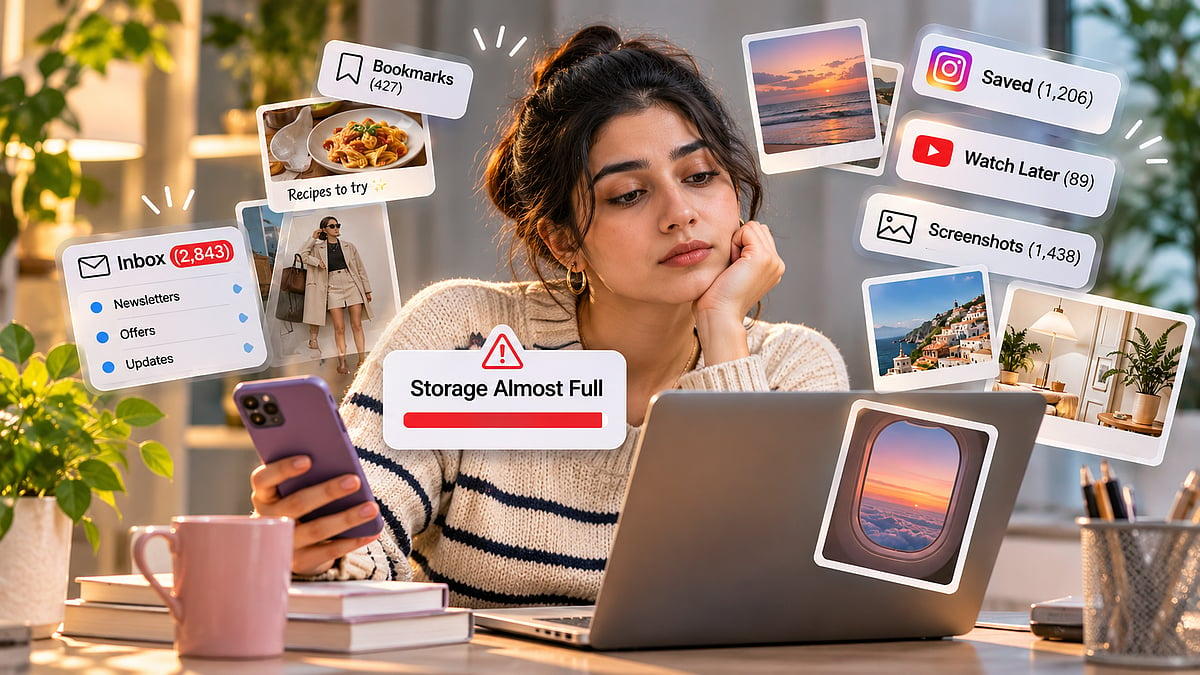
Take a moment to scroll through your phone’s gallery. There are probably screenshots of restaurant recommendations, outfits you spotted online, recipes you promised to try and videos you thought were worth watching later. Then there are the unread emails and browser tabs that have somehow survived for weeks. Sounds familiar? We are constantly surrounded by information, and somewhere along the way, saving everything we come across has become a habit. We save things for convenience, inspiration or simply because we might need them someday. But when did our phones become overflowing archives of things we rarely use? Welcome to the age of the digital hoarder.
What exactly is digital hoarding?
Visit extonnews.click for more information.
Digital hoarding refers to the excessive accumulation of digital content, often without a clear purpose or intention of revisiting it. Unlike traditional hoarding, where physical objects occupy space in our homes, digital clutter builds up across phones, laptops, cloud storage and social media accounts.
It can range from duplicate photographs and downloaded files to old documents, newsletters and hundreds of bookmarked posts. The accumulation often goes unnoticed until a phone flashes that familiar ‘Storage Almost Full’ notification.
What makes it interesting is that digital content feels less intrusive than physical clutter. A thousand photographs can sit inside a device without affecting our surroundings, making it easier to overlook just how much we have collected.
‘I'll need this someday’ mindset
A major reason behind this habit is the possibility that something might be useful in the future. We save a makeup tutorial before an upcoming event, screenshot a restaurant recommendation or bookmark a workout routine with every intention of trying it.
There is a certain reassurance in knowing that the information is available whenever we need it. Deleting it, on the other hand, can feel like giving up an option.
This is where saving becomes less about actual necessity and more about preserving possibilities. We may never follow that skincare routine or visit that place, but keeping the reference gives us the feeling that we still could.
New-age storage space
Social media platforms have made collecting content incredibly easy. Instagram’s saved collections, Pinterest boards, YouTube’s watch-later feature and online shopping wishlists allow users to organise everything that catches their attention.
For many users, these folders have evolved into personal mood boards. Fashion inspiration, wedding references, dream holidays, home decor, beauty trends and career ideas all find a place in these digital collections.
However for some saved content goes beyond creative inspiration and becomes a way of holding on to memories and connections. Gen Z social media creator Amaan Nagan shares, “As an individual and as creator I not only find myself revisiting saved instagram reels, screenshots and posts but I also find myself revisiting to the dms of the person that I care for. That I have feelings for. Saved Instagram reels helps for ideation and inspiration and some reels are helpful while others just rot in saved section. I revisit the chats to see whether the reel I sent has been acknowledged by either a heart or laughing emoji. A conversation that I yearn to begin in which saved reels and posts definitely helps. Doesn’t matter what the outcome is but saved reels and posts gives me a hope to send and begin the conversation with whom I’ve always wanted a genuine connection."
However, the constant stream of content also means that the folders keep growing. A post saved today can quickly disappear beneath dozens of newer ones. The irony is that we have made it easier to save information but not necessarily easier to find or use it.
Why is it difficult to let go?
Not everything we keep has a purpose. Sometimes, digital clutter is tied to memories and emotions.
An old photograph might remind us of a particular holiday, a conversation might bring back a familiar feeling, while an old video could capture a moment we are not ready to part with. Even seemingly insignificant files can carry sentimental value.
There is also the discomfort of making a decision. Should we delete that photograph? What if we need that document later? What if the post disappears and we cannot find it again? Gradually holding on often feels easier than deciding what can go.
Instagram Over Google? Why Reels Are Becoming The New Way To SearchDrowning in digital clutter?
The inconvenience becomes noticeable when finding something important starts taking longer than it should.
An overflowing digital space can also create a sense of unfinished business. Those unread articles, saved recipes and bookmarked videos serve as constant reminders of things we intended to get around to but never did.
Dr. Hozefa A Bhinderwala, Consultant Psychiatrist, Saifee Hospital, Mumbai explains, “Humans, as a species, have grown over millennia and have seen times of plenty and times of lack. Even though humans rarely run short of food or water, humans still keep a mind-set of being ready for a sudden shortage. In the past, that shortage was food and water; today, it is files.
In times, digital hoarding is a psychological coping mechanism driven by three overlapping triggers:
Fear of Missing Out (FOMO) and loss aversion: When humans delete a file, it feels final and can make humans anxious that humans might lose a key idea, chance or future help. Keeping a file gives humans a sense of control over the huge amount of information around us.
Attachment and identity: Digital files are often part of our memory and how humans see themselves. Photos, old chats and even recipes humans hope to try are reminders of who humans were or who humans want to become and humansre not ready to give them up.
Offloading: In a time when humans are constantly bombarded with information, saving links is like having an external drive. It lets human brain say, 'Humans cannot deal with this now, so humans will keep it safe for later.'
Keeping a file may feel harmless at first. Chronic digital clutter slowly erodes mental well-being. Every unread folder or overflowing inbox is an " loop” an unfinished task that strains working memory and keeps human brain tired. Over time, this visual and mental noise makes humans feel stuck, breaks humans focus and creates a guilt in humans about all the things humans have not read or done.
In psychiatry, a type of compulsive disorder called hoarding disorder exists. Some people in this group keep useless objects for no reason and cannot let go of them, which causes a lot of trouble for their families.
Like physical clutter, digital accumulation pushes mental clarity away. Regularly cleaning spaces is an essential part of keeping human mind healthy."
While digital hoarding is not automatically a sign of a psychological disorder, the habit can become stressful when it begins interfering with everyday tasks or causes significant distress.
Are We Living for the Camera? How Social Media Is Changing The Way We Experience LifeUnsave to unwind
Perhaps it is time to give our digital spaces the same attention we give our homes. Start by deleting duplicate photographs, clearing unnecessary downloads, organising important documents and unsubscribing from emails that no longer serve a purpose.
It also helps to be selective about what we save. Before adding another post to an already overflowing folder, ask yourself whether it is something you genuinely intend to revisit.
We have become increasingly conscious of decluttering our wardrobes, homes and workspaces. Maybe our phones deserve the same treatment. After all, tech is meant to simplify our lives. And sometimes, making space isn’t about adding more storage. It is about learning what we can finally let go of.