Balen Shah’s India Visit: From Symbolic First Step To Concrete Partnership
· Free Press Journal
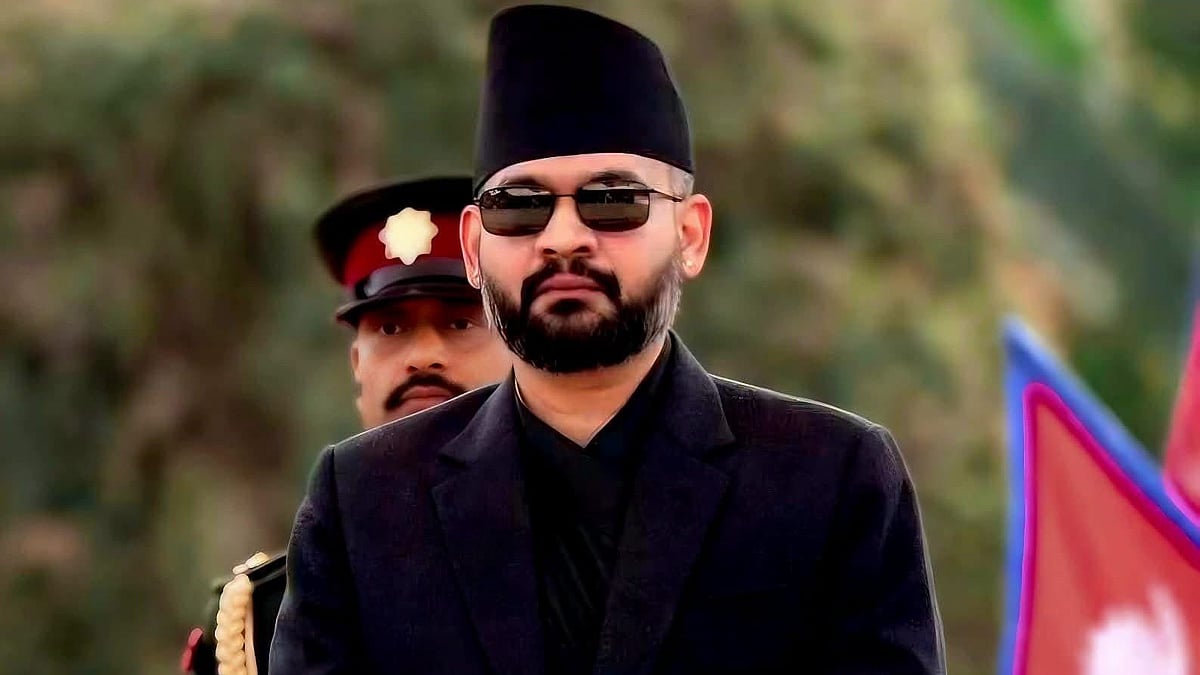
When a new leader chooses his first bilateral destination, the choice itself is a statement. Prime Minister Balendra Shah’s decision to begin his foreign travels in New Delhi rather than Beijing was already noted in Kathmandu and New Delhi. What the two-day visit has now delivered is more than symbolism. The outcomes—substantial reconstruction support, eight new agreements, and a cluster of connectivity and energy projects—show that both sides used the window of a fresh mandate to move beyond the usual optics of goodwill.
Visit turconews.click for more information.
Prime Minister, Balendra Shah’s two-day visit to New Delhi has now given may give a fillip to Indo-Nepal ties which had gone to the lowest ebb during previous communists regime headed by K.P.S.OLI. The agreements with Prime Minister, Narendra Modi offer a framework for reconstruction, connectivity, energy and institutional cooperation. Their durability will depend on delivery.
During my six-year stint in Nepal, covering its transition to democracy from the Rana regime, I witnessed anti-India sentiments, often patronised by communists and remnants of Rana regime , even as Nepali Congress-led governments traditionally maintained friendly ties with India. In the changed political scenario, Balen Shah, who hails from the Terai region bordering Bihar and Uttar Pradesh and has historically felt marginalised by successive regimes in Kathmandu, may adopt a pragmatic approach towards improving relations with India. Such an approach would not only reflect geographical and economic realities but also serve the interests of the people of Nepal. Shah may simultaneously seek to maintain equidistance between India and China, balancing Nepal’s relations with both neighbours, particularly as Beijing significantly expanded its presence during Oli’s tenure.
Shah’s decision to choose India for his first official bilateral visit abroad since taking office in March is itself an important signal. It contrasts with former prime minister, K.P. Sharma Oli’s December 2024 visit to Beijing, after New Delhi had not extended him a formal bilateral invitation in the months following his swearing-in. This does not mean Nepal is abandoning an independent foreign policy or its engagement with China; it recognises the geographical and economic realities that make India indispensable. For Shah, whose electoral mandate reflects public impatience with conventional politics, the visit also offers an opportunity to demonstrate that diplomacy can deliver visible gains.
Unresolved Strategic Issues
Three sensitive issues remained outside the publicly disclosed discussions. The Agniveer scheme, which has disrupted traditional Gurkha recruitment into the Indian Army following Nepal’s opposition to the Agnipath model, was not discussed, despite its historical and livelihood significance. Similarly, the territorial disputes involving Lipulekh, Kalapani and Limpiyadhura did not figure specifically in the talks, although the joint statement referred generally to outstanding boundary issues. China’s growing strategic and economic influence in Nepal also remained unaddressed publicly. These omissions suggest that both leaders prioritised immediate cooperation and a political reset over contentious questions, but these unresolved issues will continue to shape the strategic contours of India-Nepal relations and require sustained diplomatic engagement.
Challenges in Taking the Agenda Forward
Implementation will be the real test. Large reconstruction packages require transparent, timely utilisation and coordination between multiple agencies on both sides. Hydropower and cross-border railway projects have historically faced delays linked to land acquisition, environmental clearances and financing. The open border, while an asset, also demands continuous management of security, migration and smuggling concerns.
Political transitions in either capital can slow follow-through. Nepal’s domestic politics remain fluid; sustaining focus on long-gestation projects will require consistent bureaucratic ownership. Border disputes and occasional public sensitivities, though deliberately kept off the formal agenda this time, have not disappeared and can resurface. Finally, Nepal’s simultaneous engagement with China means that Indian projects will continue to be measured against the speed and scale of Chinese offers. Delivery, not announcements, will determine which partnership is seen as more reliable.
Key Takeaways and Their Meaning
The most immediate signal is the development cooperation package of 24,000 crore Nepali rupees (approximately ₹15,000 crore) for post-flood reconstruction and longer-term development. Coming after the devastating August floods that killed around 1,500 people and left thousands missing, the package positions India once again as the first responder and underlines the practical content of the Neighbourhood First policy.
Equally significant is the range of the eight MoUs. They cover capacity building for Nepali civil servants, forensic science and police academy cooperation, health and medicine, Ayurveda and traditional systems, sustainable urban development, livestock and fisheries, and the establishment of a satellite communication network using the South Asia Satellite. These are not ceremonial documents; they address governance, public service delivery, disaster response capability and everyday economic sectors.
On connectivity, the virtual flagging-off of the Sarayu-Kamala Express between Ayodhya and Janakpur, the foundation stone for the Banbasa Integrated Check Post, progress on other border posts, the new motorable bridge between Dharchula and Darchula, and the dedication of Phase II of the Motihari-Amlekhgunj petroleum pipeline together tighten the physical and commercial links. The foundation stone for the 669 MW Lower Arun hydroelectric project and the petroleum terminal at Jhapa further deepen energy interdependence. India has also facilitated additional winter electricity imports from Nepal, turning the relationship into a more reciprocal one.
Taken together, the Joint Vision Document—“Samriddha Nepal, Samunnat Bharat” (Prosperous Nepal, Developed India)—gives these discrete steps a longer horizon. The visit therefore converted a political opening into a set of actionable commitments rather than leaving them as talking points.
Benefits for Nepal and Impact on People
For Nepal the most immediate gain is fiscal and physical support for communities still recovering from the floods. Restoration of infrastructure, housing and livelihoods will matter far more to ordinary citizens than diplomatic communiqués. Improved border infrastructure and the new rail link will ease the movement of people and goods, reducing the friction that has long characterised cross-border life. Access to Indian capacity-building programmes for civil servants and specialised training in forensics and policing can gradually strengthen institutions that deliver services.
Energy and agriculture cooperation offer longer-term dividends. Additional power export opportunities generate revenue; joint work on livestock, fisheries and an agro-industrial park can raise rural incomes. Health and traditional medicine agreements open avenues for knowledge exchange and supply of essential medicines. In short, the package and the MoUs touch reconstruction, mobility, skills, health and livelihoods—the domains that determine whether a bilateral relationship is felt on the ground.
Advantages for India
For India the visit consolidates strategic and economic interests. A stable, cooperative Nepal remains central to the security of the open border and to the management of shared river systems. By delivering tangible support and advancing connectivity projects, New Delhi reinforces its role as the preferred partner for practical cooperation even as China continues to expand its presence through infrastructure and investment.
The energy relationship is increasingly two-way: India imports power from Nepal while supplying petroleum products and supporting new hydro projects. Cultural and religious connectivity—highlighted by the Ayodhya-Janakpur rail service—strengthens people-to-people ties that no rival can easily replicate. Capacity-building and governance partnerships create institutional linkages that endure beyond electoral cycles. In a neighbourhood where competing influences are active, delivering results on reconstruction, power, fuel and border infrastructure is itself a form of strategic reassurance.
The visit has therefore moved the relationship past the easy wins of protocol and joint statements. The metaphor of a new chapter is no longer aspirational; the pages now contain concrete commitments. Whether those commitments become durable infrastructure, functioning institutions and visible improvement in people’s lives depends on the less glamorous work of execution that must follow.
(Writer is a senior political analyst and strategic affairs columnist based in Shimla. He is also Contributing Editor with The South Asian times from New York)