FPJ Exclusive: Why The Amsterdam Rainbow Dress Photographed On Mumbai’s Asiatic Library Steps Once Carried India’s Tricolour
· Free Press Journal
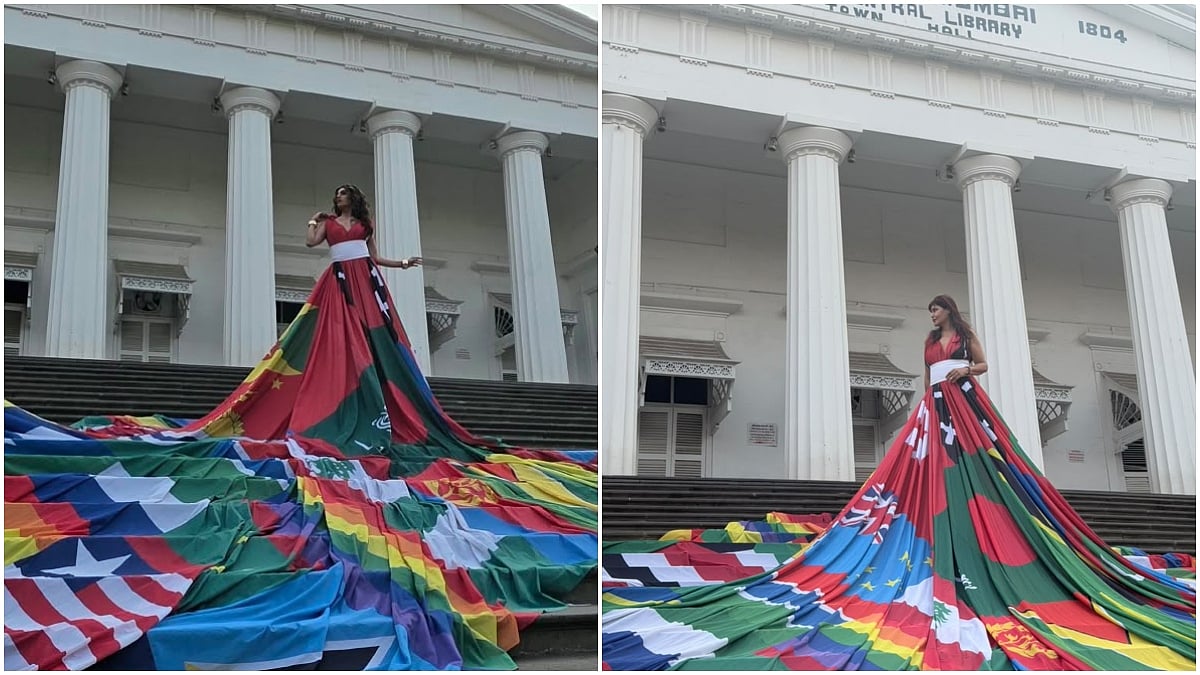
On Saturday morning, a dress made of flags spread across the steps of Mumbai’s Asiatic Library. It measures more than 16 metres across when fully laid out, but one patch of fabric tells the Indian story. A rainbow flag sits where the tricolour used to be.
Visit betsport24.es for more information.
Sushant Divgikar, also known by their drag persona Rani Ko-HE-Nur, poses in the iconic Amsterdam Rainbow DressThe November 21 shoot was the final stop on the Amsterdam Rainbow Dress’s India trip. Sushant Divgikr, who performs as Rani KoHEnur, modelled the dress on the Asiatic steps. Interior designer and columnist Nisha Jamvwal also modelled it in Mumbai.
“It was quite magical to shoot for the cause at Asiatic Library steps,” said JamVwal, describing the library as one of her favourite landmarks in Bombay. For her, allyship means listening, learning and showing up, and using whatever platform she has to make a difference.
“We cannot speak of an evolved, progressive society while people are still made to feel that they must explain, conceal or apologise for who they are,” she said. “The world becomes a better place when every individual has the freedom to be unapologetically themselves.”
Luxury consultant and columnist Nisha JamVwal models the Amsterdam Rainbow Dress on the iconic steps of the Asiatic Society of MumbaiThe previous evening, the dress was displayed at the Dutch consul general’s residence at a reception in honour of Amsterdam Mayor Femke Halsema. She had worn it earlier this year for a portrait marking the project’s tenth anniversary. By the following morning, it was on the steps of the Asiatic.
Why India’s flag was replaced
India’s tricolour was part of the original dress because consensual same-sex intimacy could be prosecuted under Section 377 of the Indian Penal Code. In 2018, the Supreme Court ruled that the provision could no longer be used to criminalise consensual sexual relations between adults. The Amsterdam Rainbow Dress Foundation subsequently replaced the tricolour with a rainbow flag.
The dress was displayed at the Dutch consul general’s residence for a reception honouring Amsterdam Mayor Femke Halsema.The project grew out of the 2016 EuroPride march in Amsterdam, where participants carried flags representing countries that criminalised consensual same-sex relations. Mattijs van Bergen, Jochem Kaan, Arnout van Krimpen and Oeri van Woezik turned those flags into a garment. The original dress incorporated 75 national flags, with Amsterdam’s city flag used for the bodice.
The dress was unveiled at the Amsterdam Museum in August 2016. Its first portraits, by photographer Pieter Henket, featured Dutch trans model and activist Valentijn de Hingh. Over the next decade, the foundation photographed it at the Acropolis in Athens, the Prado Museum in Madrid, Constitution Hill in Johannesburg and San Francisco City Hall, among other landmarks.
Using national flags made the dress a political statement. Each flag pointed to a country whose laws could punish people for consensual intimacy. When a country decriminalises same-sex relations, the foundation replaces its national flag with a rainbow flag. A change in the law becomes a change you can see in the skirt.
View this post on Instagram
From the Taj Mahal to the Pink Palace
The India trip began in Agra, where the team photographed the dress against the Taj Mahal, the mausoleum Shah Jahan commissioned in memory of Mumtaz Mahal.
“It is a symbol of love, and in its own way, so is the dress,” said Arnout van Krimpen, co-creator of the dress and director of the Amsterdam Rainbow Dress Foundation. “We had imagined bringing the two together for years, and this trip finally gave us the chance.”
Bis Maya a.k.a. maya__mirage at Taj MahalThe next shoot took place on November 14 at Rajvant Palace in Rajpipla, Gujarat. Manvendra Singh Gohil recalled that Jon Tilli, global chair of dbPride at Deutsche Bank, had asked whether the dress could be photographed at Gohil’s family palace in Rajpipla. Gohil agreed to host the shoot, with one clarification about the building still known as the Pink Palace. “The palace isn’t pink now. It’s white,” he recalled telling Tilli.
Kunj Kumar at the palace in RajpiplaGohil, who came out publicly as gay in 2006 and has worked with LGBTQ+ communities in Gujarat through Lakshya Trust, helped arrange models for both the Agra and Rajpipla shoots. He wanted the photographs to draw attention to the stories of LGBTQ+ people in the places the dress visited.
View this post on Instagram
Van Krimpen said the foundation also presented the dress in Mumbai and Bengaluru with Deutsche Bank, the financial partner for the India trip, before returning to Mumbai for the reception and the Asiatic shoot.
In the foundation’s inventory, the rainbow flag that replaced India’s tricolour is listed at position 66. By the time the dress reached the Asiatic steps, the change India had made in law eight years earlier was already sewn into it.