Sorry, Robert Pattinson Is Not James Bond
· The Atlantic
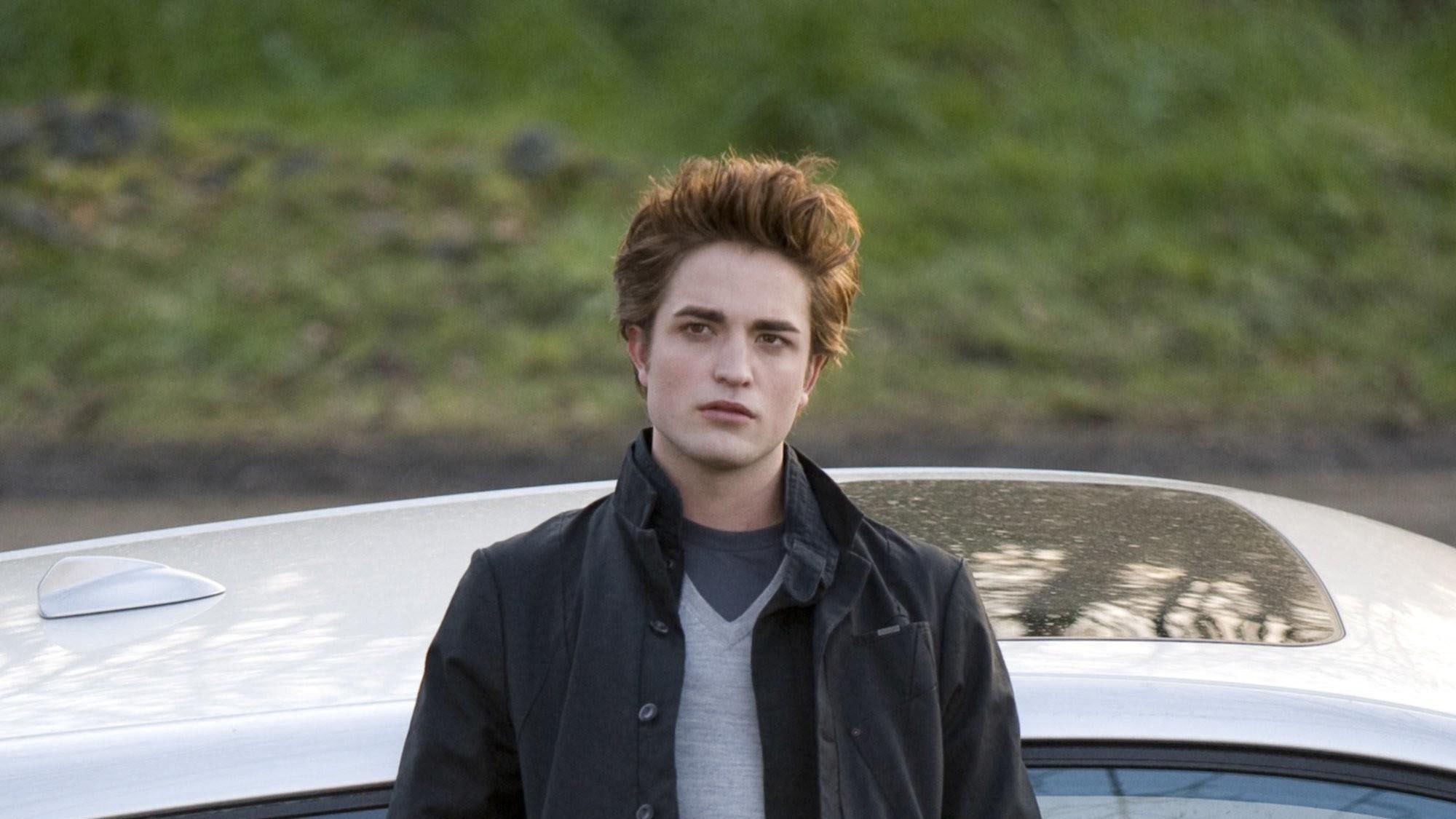
Robert Pattinson is, I’m sure, a fine actor. I cannot vouch for this because I have not seen him in movies I’ve liked. Granted, I have not seen his entire body of work; I was already in my 40s when he landed his big role as a vampire in Twilight, a movie that was not exactly aimed at my demographic. I am a fan of superhero movies, and he was, in my view, a terrible Batman: He made Bruce Wayne into a dull cop in a costume. Still, he seems to be working a lot, so someone out there likes him.
Visit betsport.cv for more information.
But is he James Bond? No. Amazon MGM Studios, which now owns the movie franchise, announced today that he’ll take over the role. Yet Pattinson lacks the manly gravitas, the physicality, the wit, to play the world’s most dangerous spy.
I’m a Bond superfan. As a kid, I saw the Sean Connery movies only on television. I was 13 when I saw my first Bond film on a big screen: Live and Let Die, starring Roger Moore. It was a revelation. (I was old enough to start getting the jokes about sex, for one thing.) I then devoured, in proper sequence, all the Ian Fleming novels that inspired the movies. When I visited London as a teen in 1975, I didn’t care about seeing Parliament or the crown jewels. I wanted to be Moore—hey, he was the only movie Bond working at the time—and wander the streets once walked by the British spy who always saved the world and got the girl.
I know the voice, mannerisms, and quips of every cinematic Bond. I also know what Fleming’s Bond looks and sounds like. According to Fleming, he was based on the 1940s bandleader Hoagy Carmichael, if that makes any sense to you, and I even know where Bond’s boss, M, has his office and his favorite club. (I also know his full name: Miles Messervy. You’re welcome.) I know what Bond’s maid, May, makes him every day for breakfast.
In other words, I know James Bond. James Bond is a friend of mine. And Robert Pattinson, you are no James Bond.
[From the March 2024 issue: The James Bond trap]
Bond does not need to be a hairy bruiser; in the movies he loses plenty of fights, and in the books he routinely gets beaten to a pulp and ends up in the enemy’s clutches. Connery was perhaps the most macho of the Bonds, whereas Moore was the most dainty. All of them, however, were charismatic rogues, mature adults who could shoot, fight, drink, and—well, other things. They enjoyed every martini and they made a play for every shapely woman who crossed their path. (Bond is suave and a hero, but he’s also a boozy, sexist boor.)
Can Pattinson carry the legacy of any of his predecessors? Aficionados will disagree on who made the best Bond, but each actor had a niche. Connery was a product of the Cold War and the swinging ’60s. (He came back to play Bond once in 1971, Diamonds Are Forever, a misfire that included fitting him with a bad toupee; he made one more mediocre Bond film in 1983 with a different production company as a one-off outside the “canonical” Bond series.) A temporary replacement Bond, an Australian named George Lazenby, did a fine job in one movie, and then blew his career by walking away from the character. Moore, like the rest of us, did his best to make his way through the silly 1970s, but I think he is underappreciated: His 007 grimly faced down Christopher Lee in The Man With the Golden Gun and dispatched not one but two genocidal freaks bent on planetary destruction: a web-fingered weirdo in The Spy Who Loved Me and a eugenics-obsessed, space-industry billionaire—a plot clearly ahead of its time—in Moonraker.
Moore was a decent Bond, but stayed with the role too long. In 1985, the 57-year-old Moore had a love scene with 36-year-old Grace Jones in A View to a Kill. Let us not speak of it again.
Timothy Dalton, another underappreciated Bond, was an accomplished Shakespearean actor who moved into the role easily, and brought a combination of Connery’s violent physicality and Moore’s caddish humor. (Watch the pre-credits sequence of The Living Daylights, which is one of the best cold opens in the entire series.) Producers had begun looking at the next Bond, Pierce Brosnan, when he was still playing the TV detective Remington Steele and was too young and callow to play a spy who was licensed to kill. But as he matured, he was an obvious choice to play Bond perhaps like no actor since Connery. Brosnan took Bond into the new, post–Cold War world with style, but also with murderous determination: In GoldenEye, one of the best Bond movies, Brosnan looks directly into his best friend’s face and then drops him to his death.
All of these men as Bond exuded a kind of energetic and masculine combination of professionalism and uncontrollable individuality. In the books, 007 is a complex character who soldiers on because it’s his job. He is sometimes morose and regretful. But all of that anguish would make for a drab series of movies, and to their credit, Connery, Lazenby, Moore, Brosnan, and even the dour Dalton manage to look they’re having fun—at least when they’re not about to be cut in half by lasers or strangled by a python.
Here I will aggravate a lot of Bond fans: I think the series went off the rails with the casting of Daniel Craig and a drastic change in the 007 scripts. Instead of taking on supervillains, Bond tussled with terrorists and financiers, all while thinking and talking way too much about his psyche. Craig, another fine actor, was too brutish, and the scripts make plain that the job did, in fact, get to him. Craig’s Bond dressed well enough, but he always seemed uncomfortable in his suits: He’s a brawler with deep, complicated feelings, and one thing the cinematic James Bond does not need is a lot of feelings. The Craig scripts became like therapy sessions: When the big reveal came in the Craig movie Spectre—that the sadistic, megalomaniacal genius Ernst Blofeld was actually just a little boy with hurt feelings whose dad liked Jimmy Bond better when they were kids—I nearly walked out of the theater. (And by the way, what an utter waste of Christoph Waltz, who was born to play Blofeld.)
By settling on Pattinson, who is even more angsty than Craig, the producers seem intent on continuing the decline. At least in the performances I’ve seen, Pattinson is sensitive; he broods; he’s conflicted; he has messy hair; he has deep, watery eyes; he—
He’s a walking young-Millennial stereotype, is what I’m saying.
[Read: Leave James Bond alone]
He doesn’t appear old or tough or coldly professional enough to be Bond. Think of this: Connery was 31 when he filmed Dr. No and 32 in From Russia With Love. Moore was 44 in Live and Let Die. Dalton was 41 when he strapped on his Walther PPK. Craig was 37 when he sat at the card table in Casino Royale. Pattinson is 40—and yet all of these guys look self-assured and old enough to play Pattinson’s father, not his colleague. (Even Brosnan seems like a tougher old brother, not a fellow Double-O.)
Having most recently watched Pattinson mumble and anguish his way through The Batman, I cannot imagine him driving a Soviet tank through the streets of Russia, lecturing M on the finer points of blending cognac, or gently pushing the bad guy out of a space station’s airlock with an invitation to “take a giant step for mankind.” Perhaps the next film will do wonders; Moore, for one, was usually better when the scripts stuck to action instead of cheap comedy. But I have no faith, after the Craig psychodramas, that the writers will rescue Pattinson—or Bond.
Amazon MGM is trying hard to work up a new image for Pattinson. Their first look has him in a tux sighting a sniper rifle, his face half-shadowed and his hair (for once) combed. Maybe it’ll work. But I still cannot imagine him trading barbs with the likes of Goldfinger: I imagine that when the mad criminal offers him a mint julep, Pattinson will scowl and explain that alcohol and sugar are bad for you.