The Midwest Is Back on the Map for Democrats
· The Atlantic
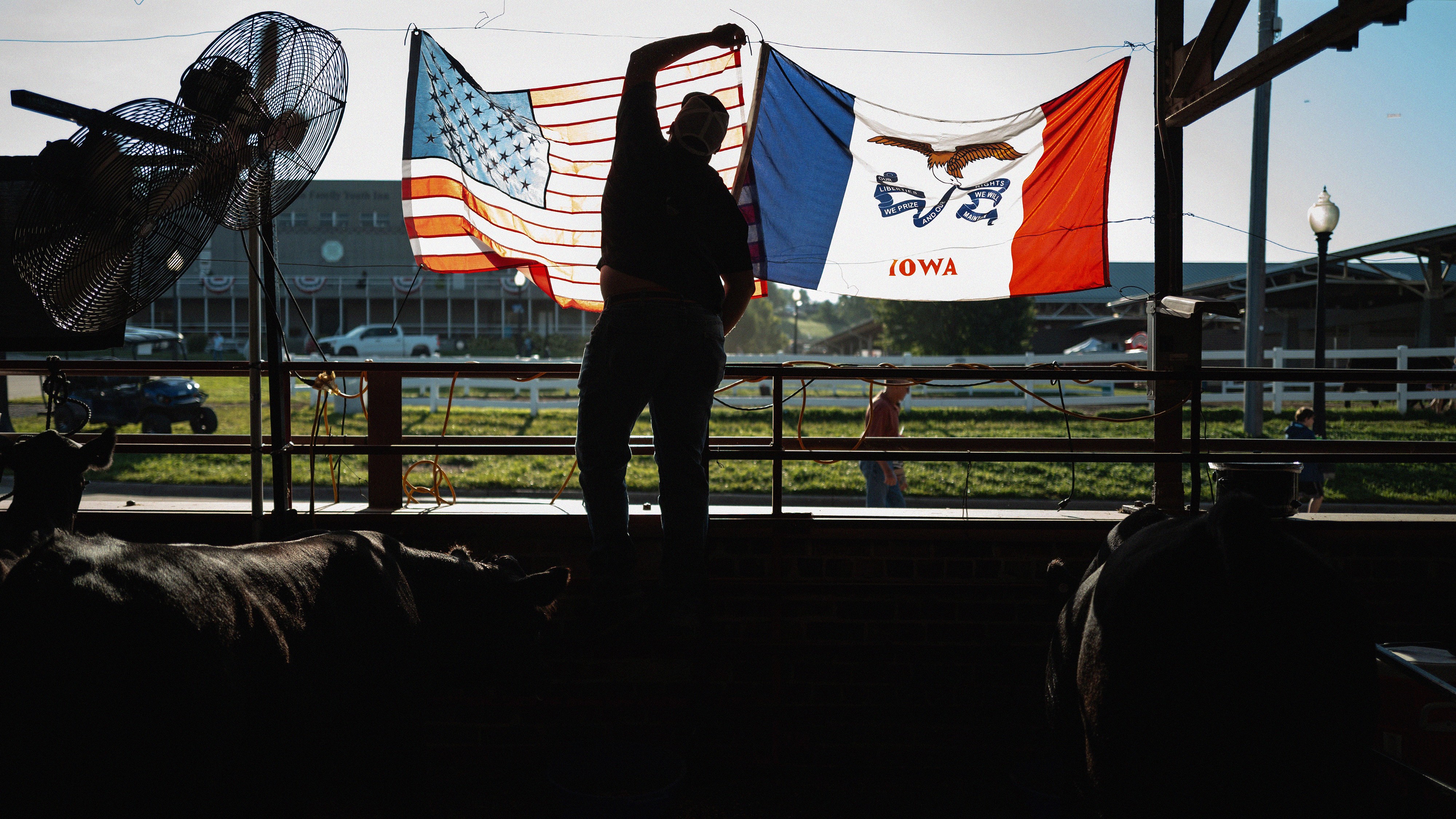
Last night, in the streets of Austin, Democrats honked their horns and hung out their windows, like it was V-E Day. In the nation’s capital, they blasted “Party in the U.S.A.” near the White House. But in southeast Iowa, the blue revolution came quietly.
The Democrats of Des Moines County—a place that does not actually contain the state capital, but a small, industrial river city and rural areas along the Mississippi—have not come to associate Election Night with joy. The half dozen white-haired Iowans at the Burlington office’s “watch party” were blinking in disbelief at the TV as MS NOW election alerts flashed across the screen. Their party had retaken the governorship of Ohio—and somehow won a Senate seat in South Carolina? Texas was within reach. So, it seemed, was Kansas? “This might be a very big night,” Tom Courtney, a 79-year-old former state senator and former leader of the county party, told me, in what was already sounding like a colossal understatement.
Visit casino-promo.biz for more information.
Iowa’s results had yet to come in. He and the other Democrats in the room seemed to be experiencing happiness only distantly, like birdsong from deep within a dark wood. This county, which had elected Barack Obama by about 23 points in 2008, was one of 31 Iowa counties that swung to Donald Trump in 2016. Two years ago, Trump won Des Moines County by 15 points, and Democrats began speaking of the “river counties” in the past tense—pieces of Iowa’s blue wall, lost forever.
Courtney was on the phone. He paced the office, passing lawn signs, a cooling pot of chili, and the final slices of a Casey’s taco pizza. Then, suddenly, gasps. The countywide results were in, and a map of election results showed Des Moines County faintly—yet undeniably—blue. The county’s voters had opted to send a Democrat to the state house and another to the U.S. House; they’d also voted to make Rob Sand the state’s first Democratic governor elected in 20 years. “Did you hear that?” Courtney asked me, from across the room.
By the end of the night, Iowa would also send Josh Turek to the Senate, plus three Democrats to the House. Kansas would send a Democrat to the Senate for the first time since the invention of beer in a can. In Ohio, the party would send Sherrod Brown back to Congress, and Amy Acton to the governor’s mansion. At the office in Des Moines County, Courtney’s wife, Nancy, emerged from the office kitchen with several plastic cups full of room-temperature peppermint schnapps. “We did good,” she told the small group of people, which, despite the cavalcade of thrilling news, was maintaining a measured, midwestern composure. A fortunate combination of variables had put Iowa, and the rest of the Midwest, back on the map for Democrats. The next big challenge for the party will be keeping it there.
War. Tariffs. Gas prices. It’s all I heard at the polls yesterday morning in Iowa, where, like pretty much everywhere else, the midterm elections were a referendum on choices made by President Trump. Even loyal Republicans I spoke with at the polls seemed bummed to be voting for the GOP. “Somebody’s gotta do it,” one man told me outside Burlington’s First Church of Nazarene when I asked how he felt about Republican leadership. Later, a woman on the other side of town told me she was eating mostly toast and tacos to save money. She’d still submitted an all-Republican ticket, she said. “But I didn’t want to vote for any of them.”
Still, to have a night like last night, Democrats needed more than bad atmospheric conditions for Republicans: They needed good candidates. And where it mattered most, they had them. In Iowa, Democrats ran Sand, a centrist who has emphasized frugality and promised to take on corruption. “Right person, right message, right place, right time,” Sandy Dockendorff, a longtime Democratic activist in Des Moines County, told me. Her party also had Turek, a four-time U.S. Paralympian whose compelling backstory and commitment to moderation proved enough to defeat Ashley Hinson, widely considered to be the star Republican recruit of the cycle. In Ohio, Sherrod Brown defeated Jon Husted, despite the latter’s allegedly fantastic posterior. And in Kansas, Democrats managed to get Adam Hamilton, a megachurch pastor who until recently was a Republican, at the top of the slate. It helped that Hamilton’s opponent, the incumbent Senator Roger Marshall, was impressively weak. “In a shitty environment, one way you don’t win races is to combine shitty candidates running shitty campaigns,” a senior—and very bitter—GOP strategist involved in multiple Senate races, said.
[Read: Who thought this ad was a good idea?]
The lesson, according to national Democrats, is clear: The winning candidates were “comfortable being a different type of Democrat,” the party strategist Lis Smith told me in a text. Those candidates had worked hard to persuade independents and Republicans, even if “it didn’t always earn them fans online.” Perhaps Smith is referring, in part, to the way that Sand and Turek handled some of the most contentious issues facing the party. Both candidates, for example, ditched the party line to say that transgender girls should not play in girls sports. Last week, Turek released an ad about it that had sent many Democrats sputtering. He won anyway. “Democrats need to get better at winning rural voters,” Adam Jentleson, president of the center-left think tank Searchlight Institute, told me. “Iowa is the testing ground, and Sand and Turek are the models.”
[Read: The simple message that produced a Democratic landslide]
Last night, every county in both Kansas and Iowa moved left. Dockendorff, the longtime Des Moines County activist, had told me over coffee yesterday morning that something like this would happen. (I trusted her because, in 2020, she had been the Cassandra of the caucuses, warning me—correctly—that Iowa’s vaunted nominating contest was likely to devolve into chaos.) “Iowa is turning back to purple,” she said. A year ago, or maybe less, Democratic activists had started filling chairs at county party meetings again. Some young people, too. Energy wise, she said, “there is no comparison to 2018.” This was much, much bigger. River towns, like Burlington, where the decline of unions had hollowed out the party, were showing some potential for Democrats once more. “I hear dissatisfaction from voters here,” she said. “People trusted Trump to do. He hasn’t done.”
This assessment inspired another warning from Dockendorff—for Democrats both in and outside of Iowa. “This is not a coronation of the Democratic Party,” she said. It is an expression of frustration from voters looking for something different. “Our problem will be creating that something different.” Last night, for example, Iowans passed a constitutional amendment that will make it more difficult to raise income taxes, which might make it harder for Iowa’s new leaders to address the state’s budget shortfall. And voters in Des Moines County and others that flipped are not suddenly committed Democrats.
National Democrats have been warning for months that a significant win in November would be overinterpreted by party activists and leaders, who would assume that voters were in love with their message, rather than simply sick of the president’s antics. The Democratic Party remains thoroughly unpopular. With Trump repudiated, albeit not totally in the rearview mirror, Democrats now have the challenge of presenting an affirmative vision for the country. How will they lower gas prices, or the price of milk? How will they talk about transgender issues as a party? Or immigration? Now, Dockendorff said, “the internecine war begins.”
[Read: The Democratic base is angry]
Signs of the coming conflict were on display last night at the watch party in Des Moines County. Sometime after the announcement that Florida Democrats had broken the state’s Republican supermajority but before the schnapps, Ben Diewold, a co-leader of the group, said he hoped that the Democrats wouldn’t try to impeach Trump again. “All that’s gonna do is invigorate MAGA,” he said. “Let Trump fade away.” Nancy didn’t agree. “He needs to be accountable to all that he’s done.”
Soon, though, their conversation was interrupted. MS NOW was projecting that James Talarico had won in Texas. (“TalaFREAKO!” Diewold shouted.) And Rob Sand would lead Iowa.
[Read: How Texas turned blue ]
“I’m glad I’m alive to see it,” Courtney said. He dictated a congratulations text and sent it to Sand. A few minutes later, a couple of the younger staffers, who’d come to work in Iowa from California and New Jersey, left to celebrate at a bar downtown. They asked Courtney to join them, but he declined. He wanted to keep watching.
Madeleine Carlisle contributed reporting.