LILLEY: Mark Carney says U.S. trade talks back on, but Canadians left in dark
· Toronto Sun
See more Toronto Sun on Google — save as a Preferred Source
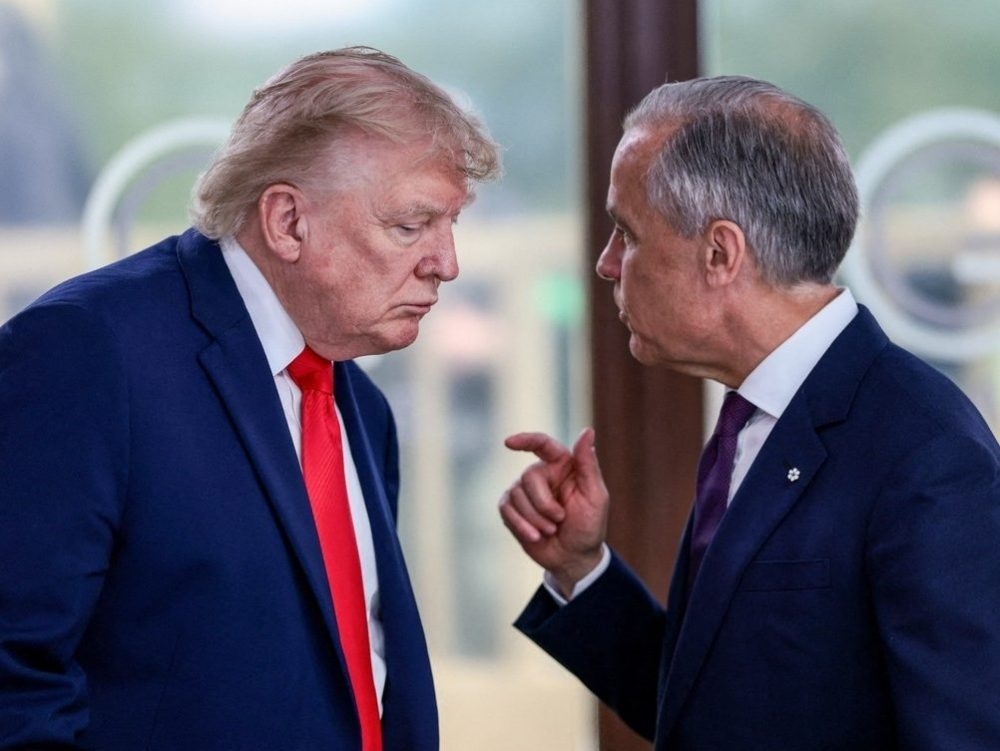
Prime Minister Mark Carney’s announcement on Sunday that trade talks with the Americans were back on came as news to just about everyone in Canada. That would include the country’s premiers, his advisory committee on Canada-U.S. economic relations, industry members and the general public.
Visit sportbet.reviews for more information.
In fact on Saturday, the day before Carney mentioned renewed talks with Trump, Politico published an interview in which Carney said he could wait U.S. President Donald Trump out.
“Well, if that’s what it takes, yeah. And American families, American businesses will also lose out because of that. They’re not winners in this circumstance. But what is happening is that every month that goes by, Canada grows stronger,” Carney said.
The numbers say otherwise
First off, the economic numbers produced by his government show an economy that is weakening, not getting stronger. Real GDP is flat at best, unemployment is up to 6.5%, inflation is up to 3.1% and the Bank of Canada just hiked interest rates .
None of this is good news.
And while Carney can wait out Trump because it helps his poll numbers and his job isn’t on the line, ordinary workers can’t. Those facing layoffs at Stelco in Hamilton , GM in Oshawa, the mill workers in 100 Mile House, B.C., or paperboard workers in Temiscaming, Que., can’t wait two more years.
So it came as a shock when, about 24 hours after that interview was published, Carney posted about renewed talks with Trump.
“This builds on our recent constructive discussions on the outlines of a mutually beneficial trade deal that would create jobs for our workers, boost affordability for families and fully respect Canada’s languages, culture and sovereignty. Our teams will now be working in the coming weeks to deliver that outcome,” Carney said of his call with the U.S. president.
Trump, speaking to reporters on Sunday in Iowa, said that a deal was “very close.
“We have the concept of a very good deal with Canada,” Trump said. “Part of the agreement is that our farmers will have to pay no tariffs.”
RECOMMENDED VIDEO
Dairy back on the table
Trump has been focused for years on Canada’s dairy tariffs on American farmers.
Canadian supporters of our supply management system will say that American farmers never pay the nearly 300% tariffs on dairy products because they never sell their full quota to us. What they don’t tell you is that Canada structures the rules so that the agreed-to quota in our negotiated trade deal can never be met.
The Canadian side is likely to agree to end such measures, but it remains unclear what Trump’s comments about no tariffs for American farmers actually mean.
He also said that part of the deal will be reviving the Keystone XL pipeline and that Canada will pay for it. There is already a private-sector deal to revive something similar to Keystone XL, though following a different route on the American side, but all of that is paid for through private investment.
The real sticking point
The main sticking point in the collapse of the trade talks in August wasn’t dairy, language or sovereignty. It was autos.
The Americans were willing to lower tariffs on cars and light-duty trucks, but not medium- and heavy-duty trucks. That would have made two major auto assembly plants in Canada redundant, given that GM’s Oshawa plant and Ford’s Oakville plant either make or are about to make trucks in those categories.
“You don’t have to get to zero,” one auto industry insider said about the tariffs.
That said, they can’t stay at 25% for medium- and heavy-duty trucks. If they do, the Ontario auto industry becomes unsustainable.
We have to hope Carney is close to a deal that works for Canada. The problem is that Canadians are being asked to trust him without being told what he’s negotiating, what he’s giving up or what he’s getting in return.