The Perfect Liberal
· The Atlantic
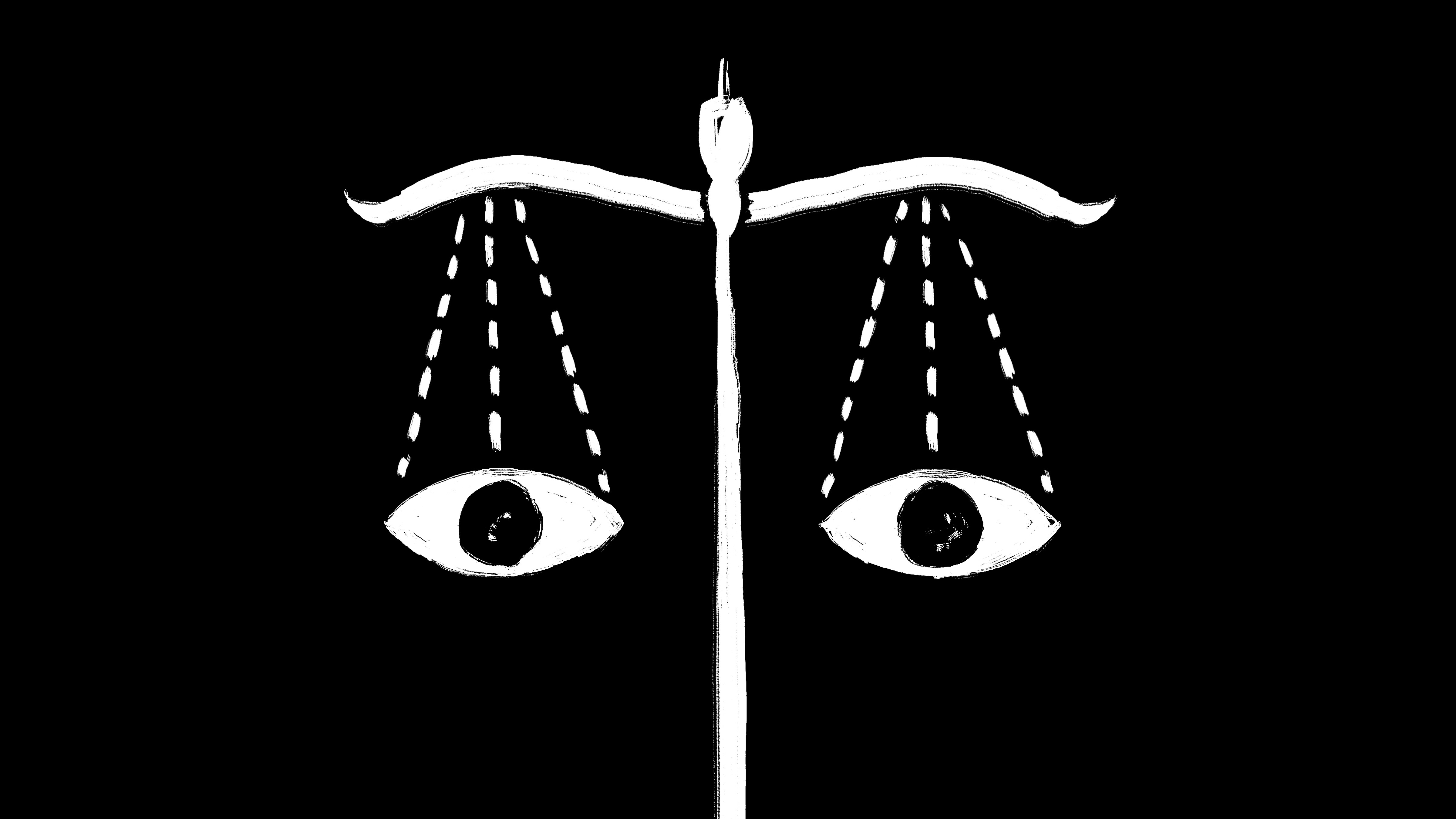
In 1989, the year the West won the Cold War, Francis Fukuyama published an essay announcing “the end of history.” He wasn’t claiming that historic events would stop taking place; what was over, rather, was the debate about the meaning of those events. Since the Enlightenment, Western thinkers had believed that history was progressing toward a final destination. According to communism, the engine of progress was class conflict, and history would end in the creation of a classless society. With the failure of the Soviet empire, Fukuyama argued, this idea had been discredited. Only one alternative remained: It was now clear that the “end point of mankind’s ideological evolution” was “the universalization of Western liberal democracy as the final form of human government.” There would still be disagreements within liberalism—Fukuyama named religion and nationalism as likely fault lines—but there could no longer be any disagreement about liberalism.
Visit freshyourfeel.org for more information.
To see how that judgment is holding up, just look at the kinds of titles that political theorists are producing these days: How Liberalism Failed, A World After Liberalism, Liberalism Against Itself. Even Fukuyama wrote a book titled Liberalism and Its Discontents. Across the West, the far right and the far left are on the rise, and the one thing they agree on is their contempt for liberalism. To MAGA and its European cousins, such as France’s National Rally and the United Kingdom’s Reform Party, liberals are rootless elitists who look down on their fellow citizens while coddling immigrants and criminals. To progressives and democratic socialists, liberalism—often qualified with the prefix neo—means ruthless globalized capitalism, prettied up with rhetoric about meritocracy and human rights. Appeals to liberal principles and defenses of the liberal world order have shown little power to rally the public, or even much of the political establishment.
Now that the liberal triumphalism of the post–Cold War era is dying, what can replace it? The answer may lie in another important essay written in 1989—one that received much less attention than Fukuyama’s, but enjoys a cult reputation among keepers of the liberal flame. “The Liberalism of Fear,” by Judith Shklar, has just been published for the first time as a book—a small book, because the essay is only about 8,000 words long, but a timely one. In fact, as the political scientist Mark Lilla says in his introduction, it’s “far more timely today than it was upon its publication.” In 1989, Shklar’s minimalist definition of liberalism as a bulwark against government terror—what she calls, simply, a politics of “damage control”—might have sounded unambitious or uninspiring. In an America where ICE agents shoot protesters and grab people off the street, it sounds prescient.
Shklar’s argument involves history and philosophy, but like all political ideas, it begins with an intuition, a feeling. Communism, one might say, begins in indignation: a refusal to accept a world where some people exploit and others are exploited. Nationalism begins in loyalty: a sense of connection and obligation to one’s own people. There is nothing wrong with these emotions; they are even praiseworthy. But when one political feeling crowds out all others—when everyone and everything is subordinated to the pursuit of social justice or national pride—good can justify the worst evils.
[From the May 2022 issue: There is no liberal world order]
What makes liberalism different from these political ideologies is that, as Shklar writes, it “does not have any particular positive doctrines about how people are to conduct their lives.” Liberalism doesn’t offer a vision of a perfect world—one where injustice is abolished, or where a particular nation reigns supreme. Instead, it is rooted in a justified fear of the real world, where people with power often use it to oppress, torture, and kill. “Liberalism’s deepest grounding,” Shklar writes, is the belief “that cruelty is an absolute evil.” The classic liberal principles outlined by thinkers such as Locke and Mill, the ideas that guided the American and French Revolutions, follow from this basic fear of cruelty. Freedom of religion means that you won’t be burned at the stake for holding the wrong beliefs. Freedom of speech means that you won’t be locked up for saying what you think. The rule of law means that you can be punished only for committing a crime, not because a powerful person is out to get you.
Not coincidentally, these liberal freedoms are framed as limits on the power of the state. “Public cruelty,” Shklar writes, “is made possible by differences in public power,” and the government is always more powerful than any citizen. This isn’t necessarily a bad thing; we want the government to have the power to punish crime or defend against invasion. But liberalism believes that there must be strict and effective limits on how that power is used. “The governments of this world, with their overwhelming power to kill, maim, indoctrinate, and make war are not to be trusted unconditionally,” Shklar writes. What the liberalism of fear wants to prevent above all are “habitual and pervasive acts of cruelty and torture performed by military, paramilitary, and police agents in any regime.”
This might have seemed like an odd concern for an American political philosopher in 1989. Police states were disappearing in Eastern Europe; democracy activists were bravely standing up to tanks in Tiananmen Square; Nelson Mandela left his jail cell on his way to becoming president of South Africa. America under George H. W. Bush had its problems, but no one would have put paramilitary violence and police torture high on the list. At a time when Fukuyama was celebrating the end of history, why was Shklar contemplating these specters at the feast?
The most obvious answer is that, unlike most Americans, she had seen them firsthand. Born to a Jewish family in Latvia in 1928, Judith Nisse grew up in the shadow of approaching war and the Holocaust. In an autobiographical lecture, she recalled that as a child, she was traumatized by reading Shakespeare’s play Titus Andronicus, which is full of murder, cannibalism, and severed heads: “To this day I can still feel the fear and horror it inspired.” Her sister tried to comfort her by saying that “these things did not really happen,” but it didn’t help, because “both she and I knew that far worse was going on all around us.” As Jews in Latvia, Shklar recalled, “everyone around us wanted us to be somewhere else at best, or to kill us at worst.” The Nisse family managed to escape at the last possible moment and took an epic journey in 1940 across Russia and the Pacific to Canada. The next year, the Nazis invaded Latvia and the 40,000 Jews of Riga were murdered, most of them shot by German troops and local auxiliaries in a nearby forest.
When Shklar arrived at Harvard’s department of government as a graduate student in 1951, she was struck by how completely her American colleagues ignored the central political experience of their own time: “I knew what had happened in Europe between 1940 and 1945, and I assumed that most people at Harvard also were aware of the physical, political, and moral calamity that had occurred, but it was never to be discussed.” This “isolating” experience “had a lot to do with my later writings,” Shklar noted. At first, she didn’t intend to stay in the academy: “I would have liked to be a literary editor of The Atlantic or some such publication.” But she remained at Harvard for her entire career as a professor, writing about subjects directly or indirectly connected with the European catastrophe: the failure of the Enlightenment tradition, the concept of law in the Nuremberg trials, the nature of cruelty and injustice.
“The Liberalism of Fear” was published three years before Shklar’s death in 1992, and though it wasn’t one of her major works, the title has become a kind of shorthand for her worldview. As Lilla writes in his introduction, for Shklar, “fear of being in another’s arbitrary power is the ur-human experience that modern liberalism was developed to stave off.” In the essay, she discusses the tools that modern liberal societies use for this purpose. Some of these tools are legal: “Without well-defined procedures, honest judges, opportunities for counsel and for appeals, no one has a chance.” Others are political and economic, such as security for private property: “Nothing gives a person greater social resources than legally guaranteed proprietorship.”
[Read: This is the way a world order ends]
But Shklar is most concerned with the ideas and habits of mind that sustain liberal societies. And it is here that her message for today becomes most urgent. The “perfect liberal,” she writes, “respects other people without condescension, arrogance, humility, or fear. He or she does not insult others with lies or cruelty, both of which mar one’s own character no less than they injure one’s victims.” These aren’t the heroic virtues needed to win wars or found empires; they are minimal requirements for a society free from fear. Until recently, they were expected of anyone who hoped to play a role in American public life, regardless of their political views.
Only since Donald Trump got to the White House have Americans realized how much they took for granted the sobriety and politeness of Ronald Reagan or Barack Obama. Trumpism’s assault on liberal democracy isn’t only a matter of laws and policies. From the beginning, it has been about legitimizing cruelty. When Trump mockingly imitated a disabled reporter, or said police officers shouldn’t be “too nice” when putting suspects into police cars, or pardoned an American soldier convicted by a court martial of murdering civilians, he was sending the message that he approves of cruelty, and will support those who commit it.
The federal government and the Republican Party resisted that message in his first term; in his second, they have mostly stopped resisting. We are still a long way from the Europe of Shklar’s childhood. America has been a liberal democracy for a long time, and the majority of Americans are not ready to embrace a politics of cruelty. But that prospect feels a lot less theoretical than it did when “The Liberalism of Fear” was written. In the essay, Shklar says that government terror and cruelty weren’t things of the past, but could be seen in “the foreign news in the New York Times.” Now it’s not just the foreign news that reminds us how much we have to be afraid of—and how much we need the values and institutions of liberalism, no matter how unfashionable they’ve become.