China-India Container Freight Rates More Than Double As Surging Imports, Vessel Shortages Drive Up Shipping Costs
· Free Press Journal
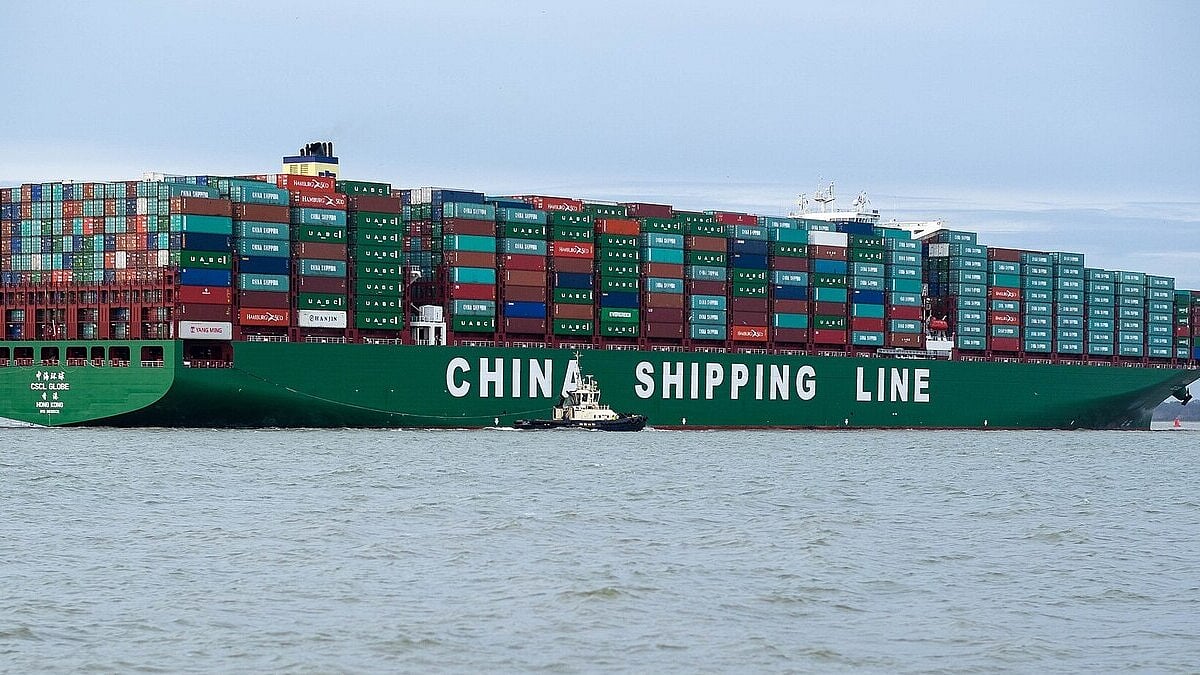
Container freight rates on the intra-Asia trade corridor connecting China to India have more than doubled since July 2026, driven by intense competition for available vessel space.
According to market updates published by The Loadstar and trade analyses from Wedoimport, spot rates for containers travelling from Shanghai to Jawaharlal Nehru Port Authority (JNPA) jumped 20 per cent between late August and late September 2026, reaching roughly $3,700 per TEU and $3,850 per 40ft container.
Visit tr-sport.bond for more information.
A TEU, which expands to Twenty-foot Equivalent Unit, is a standard unit of measurement used in shipping to describe cargo capacity on ships and at ports.
Ocean pricing on the Shanghai-to-Chennai route experienced an even steeper 25 per cent month-on-month increase over the same period, hovering around $3,600 per TEU and $3,900 per 40ft container.
As noted in trade coverage by Wedoimport, these rapid shifts mean that older freight quotes no longer accurately reflect prevailing market rates, forcing importers to quickly adjust their financial assumptions and logistics schedules.
Industrial demand and macroeconomic trade baseline
The persistent pressure on shipping space aligns with a broader expansion in bilateral trade volumes reported across maritime and economic data platforms.
Trade figures cited by The Loadstar show that India imported approximately $132 billion worth of goods from China during fiscal year 2025–26—a 16 per cent year-on-year increase that solidified China as India's largest trading partner.
This momentum accelerated further into the current fiscal year and the total value of landed Chinese imports surged 27 per cent year-on-year to $65 billion during the first five months through August.
Explaining the operational dynamics behind these figures, Jitendra Srivastava, CEO of Triton Logistics & Maritime, told The Loadstar that the market is navigating an "industrial paradox."
He observed that as India rapidly expands domestic manufacturing under government Production-Linked Incentive (PLI) initiatives, local production facilities require unprecedented inflows of capital machinery, electronic sub-assemblies and intermediate components from Chinese suppliers.
Srivastava highlighted that competitive pricing strategies by Chinese exporters attempting to clear inventory, combined with aggressive order front-loading by Indian businesses anticipating both seasonal retail demand and new regulatory quality mandates have created an intense rush for vessel capacity.
Capacity realignment and operational adjustments
Supply-side constraints on the China–India trade lane are also being driven by strategic capacity redeployments across global ocean carriers.
Wedoimport highlights that shipping lines have systematically shifted vessel tonnage away from intra-Asia routes to higher-yielding East-West global trade lanes. This reallocation has restricted the volume of container space serving Indian destinations despite surging industrial demand.
To capture high spot rates and address space shortages, regional container carriers are actively expanding their footprints on Indian routes.
For instance, there is a wave of new loop deployments into JNPA and Chennai, including TS Lines' newly launched China–West India Express 2 (CWX2) service.
Operating on a 42-day round trip, the CWX2 connects Shanghai, Ningbo, Shekou, Port Klang, Nhava Sheva (JNPA), Hazira and Mundra. CULines has also expanded its intra-Asia operations to fill capacity gaps left after SeaLead ceased its services on the route.
Risk mitigation for importers
The sudden rise in ocean freight rates introduces severe planning challenges that affect the entire import lifecycle.
Wedoimport stresses that importers must re-evaluate their complete landed-cost calculations—including baseline product price, ocean freight, insurance, customs duties, destination fees and inland transportation—before finalising new purchase orders.