Why Tata Osprey edges the Nissan Magnite and Renault Kiger
· Citizen
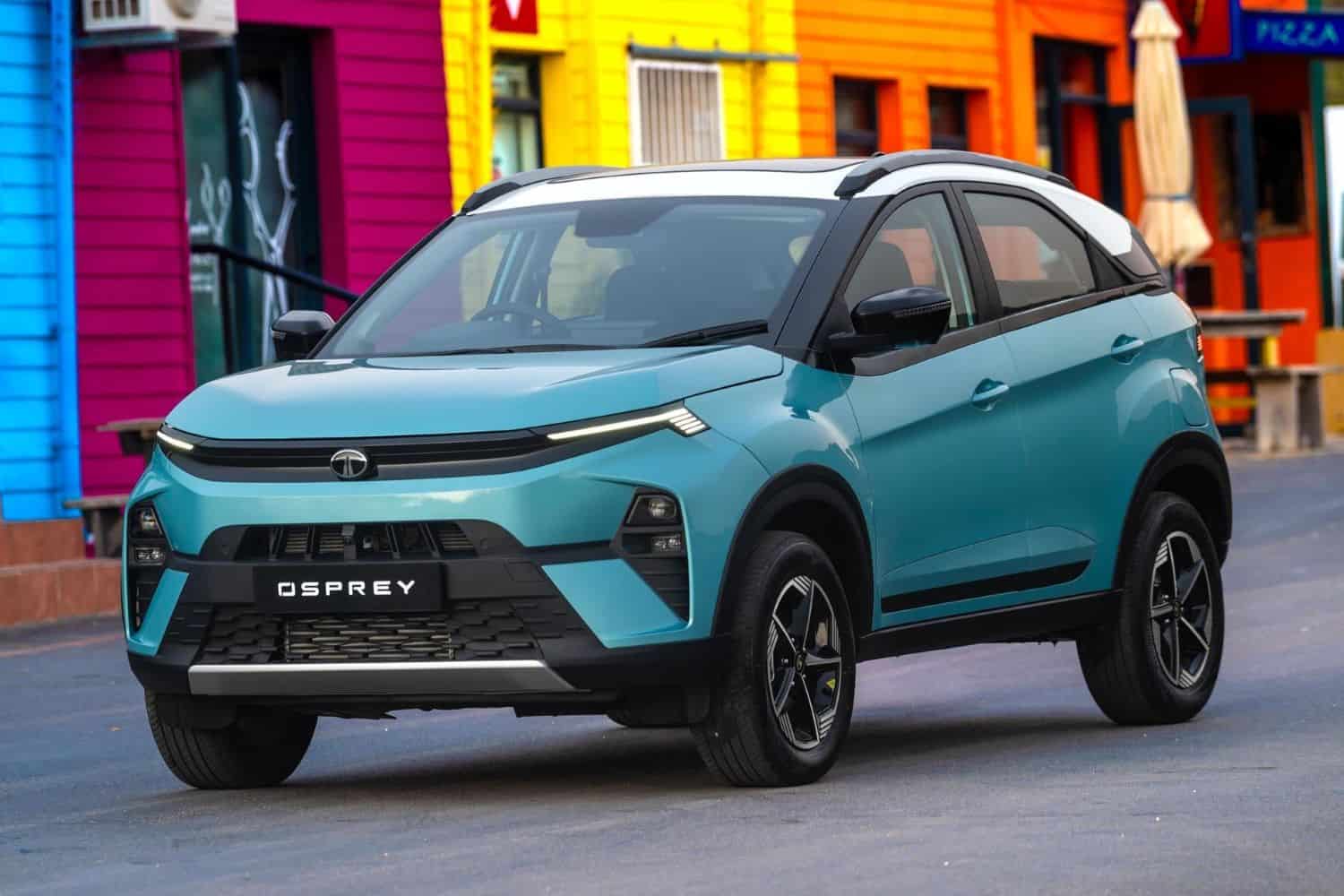
The Tata Osprey compact crossover SUV became the Indian carmaker’s fifth local model since returning to South Africa last year.
Apart from the Tiago hatchback, Tata’s SUV sales have been poor with the Punch, Curvv and Harrier not exactly setting the world alight. A trend that the rookie looks to buck.
Visit michezonews.co.za for more information.
Starting at a price of R249 900, the Tata Osprey goes up directly against the Renault Kiger and Nissan Magnite production siblings. Like the Kiger and Magnite, the Osprey is built in India where it is a top seller.
The Osprey slots in between the Punch and the Curvv and rides on the same platform as the former. Like the Punch, at a length of 3 995mm it conforms to India’s sub-four metre regulations. It has a very generous ground clearance of 208mm.
Ace up Tata Osprey’s sleeve
The Tata Osprey’s powertrain is the ace up its sleeve against its direct rivals. It features the same 1.2-litre turbocharged petrol engine that serves in the Curvv range, a mill that is standard across the range. The three-pot blown engine produces 88kW of power and 170Nm of torque via either five-speed manual or seven-speed dual-clutch automatic transmission.
The lower end model derivatives of the Nissan Magnite, which starts at R252 200, also comes with a naturally aspirated 1.0-litre engine that makes 53kW/96Nm. The 1.0-litre turbo petrol mill produces a more credible 74kW/160Nm, but the most affordable turbo derivative costs R301 900.
Compared to the Tata Osprey, the Renault Kiger starts almost R30 000 cheaper at R219 999. The same 53kW/96Nm NA 1.0-litre mill as the Magnite features on the three most affordable models in the line-up, with the most expensive free-breathing derivative priced at R254 999.
The most affordable blown model in the Renault Kiger range, which produces 74kW/160Nm, costs R278 999.