The SIR Raises Many More Questions
· Free Press Journal
When the population of a country increases, there should ordinarily be a corresponding increase in the number of voters. Births continue to outnumber deaths, and India has a large and growing population of young people.
Visit sport-newz.biz for more information.
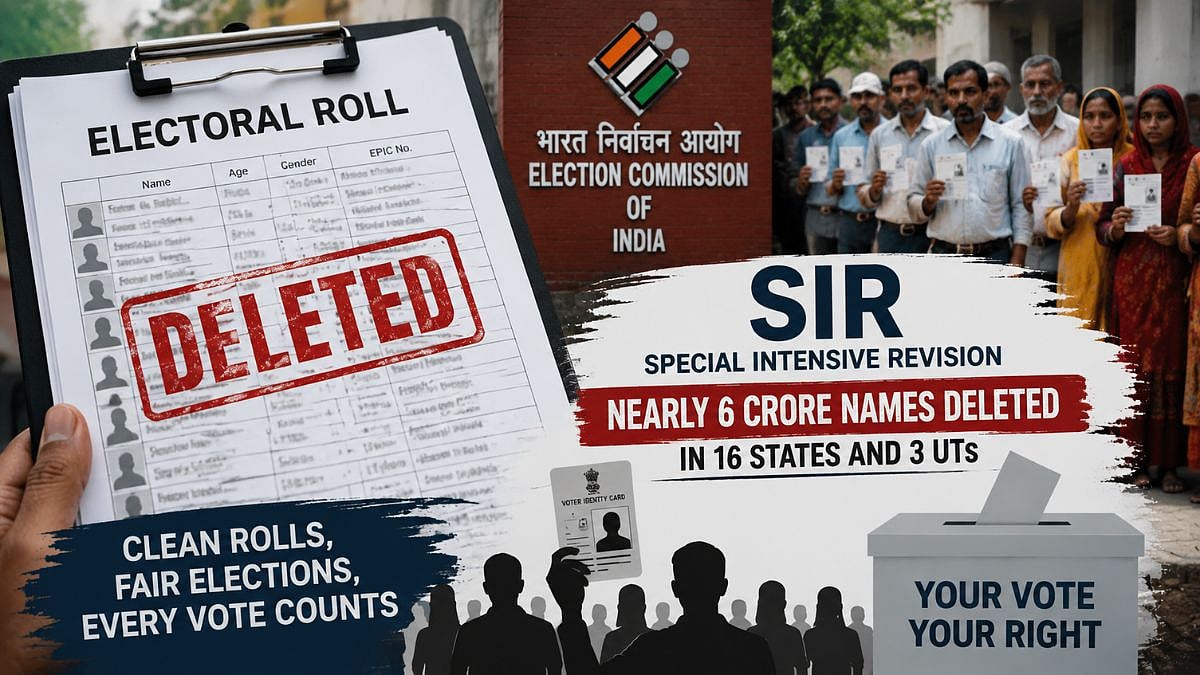
These demographic trends should be reflected in its electoral rolls. Yet, after the third phase of the Special Intensive Revision (SIR), nearly six crore names have been deleted from the rolls in 16 states and three union territories. Of the 36.08 crore names initially on the rolls in these regions, 17.04 per cent have been deleted.
Delhi has recorded the highest percentage of deletions—32.78 per cent—while Maharashtra has the highest absolute number, with 2.06 crore names removed. Clean electoral rolls are indispensable to free and fair elections.
The government has justified the exercise on the ground of illegal infiltration. But does the deletion of nearly six crore names mean that six crore infiltrators have been discovered? That would be a grotesque exaggeration.
Concerns Over The Methodology
The more disturbing question is: how did so many names disappear? The problem appears to lie in the methodology. A large number of people have reportedly been unable to establish that they or their predecessors were voters in 2002.
For the poor, illiterate, and migrant populations, producing such documentary evidence can be extremely difficult, if not impossible. Many possess Aadhaar cards, ration cards, and other documents establishing their identity and residence.
Yet, such documents have not been accepted for establishing eligibility in the manner many voters expected. The result is that genuine citizens who have voted in the 2014, 2019 or even the 2024 elections may suddenly find themselves excluded from the electoral rolls.
Many of these people exercised their democratic right to vote and helped elect the present government. Now, the very system they participated in has placed the burden of proving their eligibility back on them. The Supreme Court has upheld the constitutional validity of the SIR process. That does not mean, however, that every aspect of its implementation is beyond criticism.
Restoring Confidence In SIR
The Election Commission must, therefore, use the claims-and-objections period beginning September 6 to restore confidence in the SIR process. The concerns raised by the Karnataka and Telangana Chief Ministers about “massive and unjustified” deletions deserve serious consideration.
Every genuine voter left out must be given a simple opportunity to get back on the rolls. An electoral roll is not merely a government register; it is the foundation of the citizen’s right to choose a government.
If millions are excluded because they cannot produce a document from 2002, the exercise risks becoming less a revision of electoral rolls than a revision of the electorate itself. A revision meant to eliminate bogus voters must not end up disenfranchising genuine ones.