What Is Vikram-1? Inside India’s First Privately Developed Orbital Launch Vehicle
· Free Press Journal
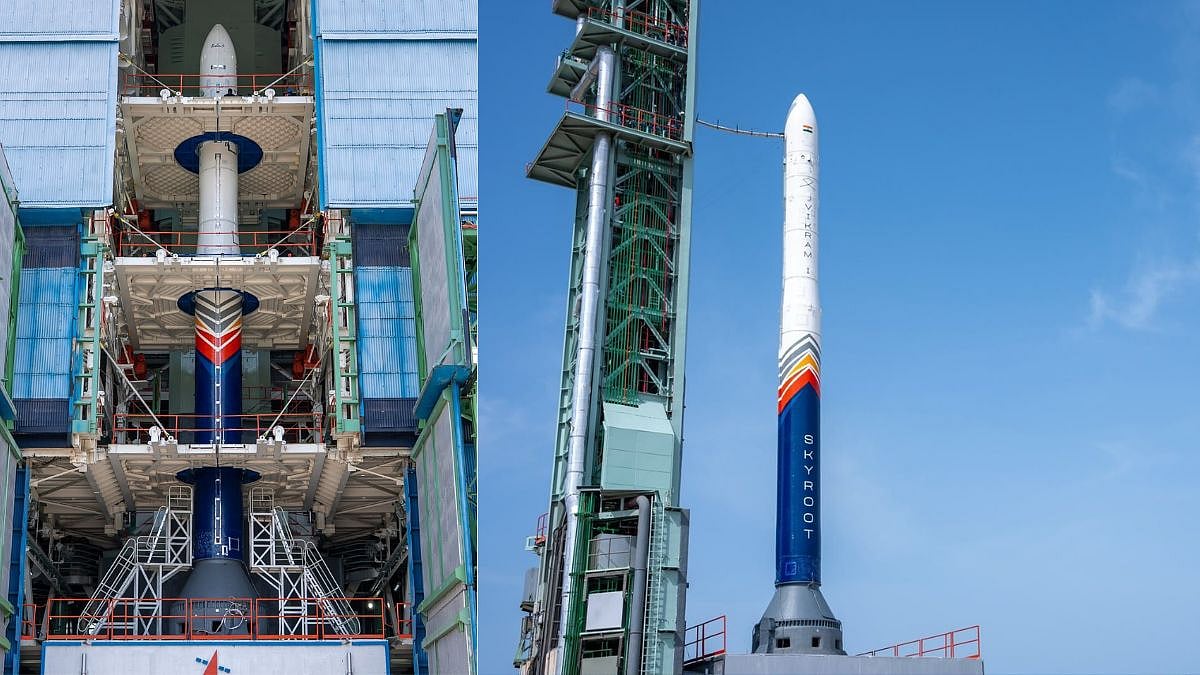
India has achieved one more milestone in space after the launch of Vikram-1. It is the first privately developed orbital-class launch vehicle which is built by the spacetech startup Skyroot Aerospace. Just like Elon Musk's SpaceX, India is also moving forward to grow the space sector in the private sector too.
With that, India has launched its first privately developed orbital-class launch vehicle, Vikram-1, on Saturday, July 18, 2026. This is the first experimental Satellite Launch Vehicle-3 (SLV-3) which was launched at 12:05 PM from Satish Dhawan Space Centre at Sriharikota. On July 18, 1980, India became the sixth member of an exclusive club of spacefaring nations when the SLV-3 was successfully launched from the same venue, placing the Rohini Satellite (RS-1) into orbit.
Visit newsbetting.club for more information.
#WATCH | Andhra Pradesh: India's first privately developed orbital-class rocket, Vikram-1, launched from the Satish Dhawan Space Centre in Sriharikota
— ANI (@ANI) July 18, 2026
Built by Hyderabad-based Skyroot Aerospace, Vikram-1 is powered by three solid-fuel stages and a liquid orbital adjustment… pic.twitter.com/QQC9CPjcxH
What is Vikram-1?
India's space sector is entering a new era with Vikram-1, the country's first privately developed orbital launch vehicle. Developed by Hyderabad-based space startup Skyroot Aerospace, Vikram-1 marks a major milestone in India's growing private space ecosystem and reflects the government's push to encourage commercial participation in space exploration. Its inaugural flight will target a 450-km orbit with an inclination of 60 degrees.
いよいよインドベンチャー軌道へ挑戦!
— LH2 (@LH2NHI) July 18, 2026
本日15:00にインドのサティッシュ・ダワン宇宙センターから、インドのロケットベンチャー「Skyroot Aerospace」のVikram-1ロケットが打ち上げられます!
Vikram-1は直径1.7m全長20m 低軌道350kg/SSO260kgの固体3段+PBSロケットhttps://t.co/gfKQ1DDoMF pic.twitter.com/vsh1vZL5Io
Named after the father of India's space programme, Dr. Vikram Sarabhai, Vikram-1 is a small satellite launch vehicle designed to carry payloads of up to 350 kilograms into low Earth orbit (LEO). The rocket is built to offer cost-effective, reliable and on-demand launches for small satellites, a rapidly expanding segment of the global space industry.
The launch vehicle is a seven-storey-tall, multi-stage orbital launch vehicle with all-carbon composite structure and powered by in-house developed propulsion systems. The vehicle weighs approximately 24 tonnes and features a three-stage all-solid propulsion system. The rocket incorporates advanced carbon-composite structures and 3D-printed components, making it lighter and more efficient.
VIDEO | Sriharikota: Thousands of students cheer as India's first privately developed orbital rocket, Skyroot Aerospace' Vikram-1 set for lift off. pic.twitter.com/WAwjcJ1IVS
— Press Trust of India (@PTI_News) July 18, 2026
Technology demonstration payloads
Vikram-1 will carry six technology demonstration payloads from Grahaa Space, Cosmoserve, DCubed and Skyroot’s own SCOPE, along with Cosmos Diamonds’ artwork “Cosmic Bloom” and a micro-art piece. Grahaa Space is a Bengaluru-based spacetech startup building a constellation of Earth-observation nanosatellites to stream near-real-time, high-resolution video of any location on the globe.
Cosmoserve Space is a spacetech startup that is testing "Mission Embrace" aboard Skyroot Aerospace's maiden Vikram-1 rocket. Instead of using rigid mechanical claws, which can shatter old, fragile satellites and create even more space junk, this soft robotic system is designed to gently wrap around and secure non-cooperative objects.
Vikram-1 Launched! India's 1st Privately Built Orbital Rocket Lifts Off After Initial Delay, Skyroot Aerospace Enters Global Space Launch MarketThe mission will also carry an international payload, uD3PP and mD3RN, developed by Germany-based DCubed GmbH. They are specialised micro-actuators developed by German space components manufacturer DCUBED Space. They are being flown on the maiden orbital test flight of India's Vikram-1 rocket to validate their performance and earn flight heritage in real orbital conditions.