Andy Serkis on Animal Farm, Authoritarianism, and Humanizing Monsters
· Reason
https://dts.podtrac.com/redirect.mp3/d2h6a3ly6ooodw.cloudfront.net/reasontv_audio_8378684.mp3 1x 1.1x 1.25x 1.5x 2x 3x :15 :15 Download Andy Serkis: What Orwell Understood About Tyranny
Visit saltysenoritaaz.com for more information.
Andy Serkis has played some of contemporary film's most memorable characters: Gollum in the Lord of the Rings and Hobbit trilogies, Kong in King Kong, Caesar in the Planet of the Apes reboot, proto-punk icon Ian Dury in the biopic Sex & Drugs & Rock & Roll, and arms dealer Ulysses Klaue in the Marvel Cinematic Universe.
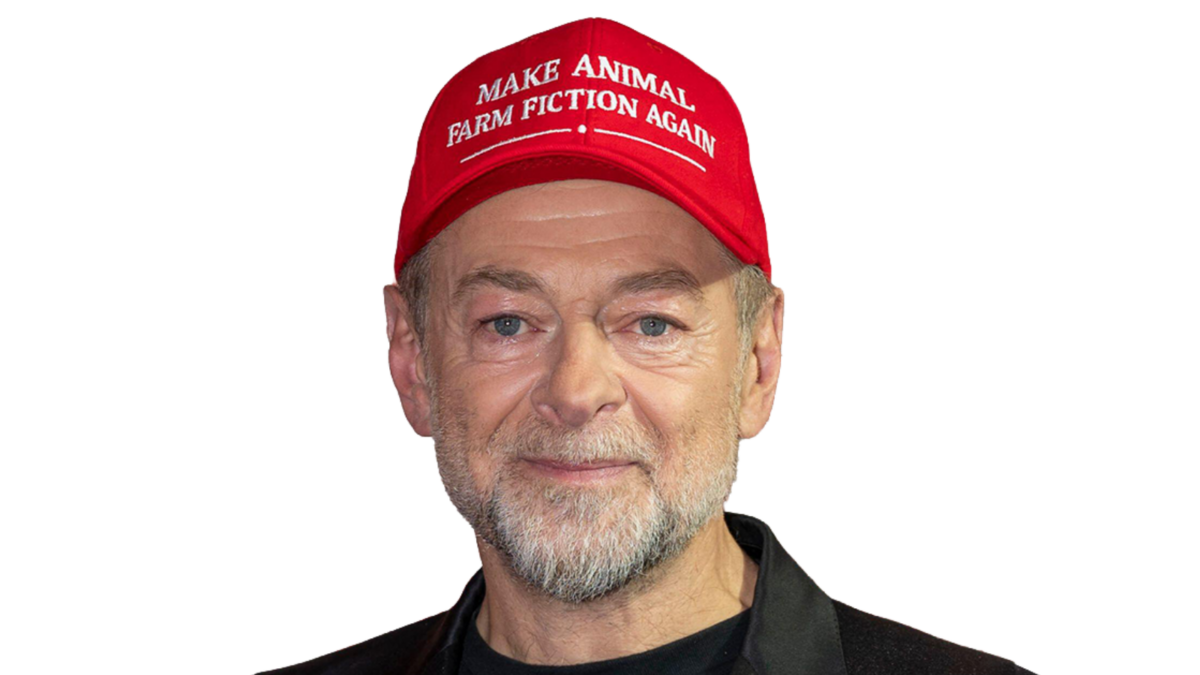
Serkis has also moved behind the camera: He directed an animated adaptation of George Orwell's Animal Farm, which was released in theaters on May 1. Later that month, Serkis spoke with Reason's Nick Gillespie about his new film, authoritarianism, and what unites his signature roles.
Q: Let's talk about Animal Farm. What drew you to the material?
A: I read the book when I was about 10 or 11 years old on the bus to school. You get to that age and you start reading things that you know have underlying themes, but you don't really fully understand what are being driven at. It had an innocence about it, and yet I could feel that there was a world that was underneath it. It was one of those books that just never left me. I read it again in years to come at various different points of my life.
Q: This is an adaptation and an update of the original. The system that you're critiquing is not socialism or international communism. Where do you go with that?
A: No. When we started working on it, we talked to the Orwell estate a lot about it. If Orwell were writing that story now, what would his targets be? He was someone who reviled authoritarianism on a grander level. At that particular time, he was aiming at a particular regime. But if he was writing Animal Farm right now, what would be his targets?
A lot of the themes are exactly the same. It's just the different management systems around the world that use authoritarianism and dictatorship to survive obviously are thriving. This is not a stab at any one leader in terms of the allegory. We're not saying "this is this political leader," but it's having a go at all of the framework of what controls us and what is authoritarian around the world, like the misuse of information, fake news, all of those things which are themes in the book, the corruption of power. It was looking at that in a modern context for a young audience, which is crucial. It was written as an allegory for young children to read, as I read it when I was that age.
Q: Orwell was writing Animal Farm 80 years ago, at a moment when authoritarianism seemed to be on the rise in various places. Compared to then, are we in a better place?
A: I don't necessarily think we are in a better place. Part of this story is about history repeating itself and why it is that we always make the same mistakes. Even though we do, we mustn't stop trying to rectify those mistakes. That's really at the core of our version: There is no answer, and we will probably keep repeating things, but you still have to keep trying to understand.
It really is about learning to listen. One of the things about making this version—it was for young people to sit in a room with their parents and grandparents, who have probably got all different viewpoints about the world, and actually really start to investigate through a debate. It was to cause a debate, but it's a family film, so that will hopefully inspire debate across generations.
Q: You've been part of some of the most successful franchises in contemporary film. Is there a common thread in the roles you've played? Is Gollum the personification of someone who gets corrupted by the possibility of more power? Is that the shadow self that you're chasing in many of these roles?
A: The job of the actor or the storyteller is to try and broaden the audience's perspective. If you're an actor inside the head of a character, you have to believe that there's a morality that that character believes in. Every character I've played, I've wanted to examine that, and therefore it takes you as a person to be empathetic to perhaps places you don't necessarily want to go. That is the challenge of acting—and you can't deny that, because you have to believe that that character sees the world from his perspective as the right view. We humanize monsters to a certain extent in order to be able to understand them and hopefully learn from them.
This interview has been condensed and edited for style and clarity.
The post Andy Serkis on Animal Farm, Authoritarianism, and Humanizing Monsters appeared first on Reason.com.