Crime rates fell since 1994 but South Africans still feel unsafe
· Citizen
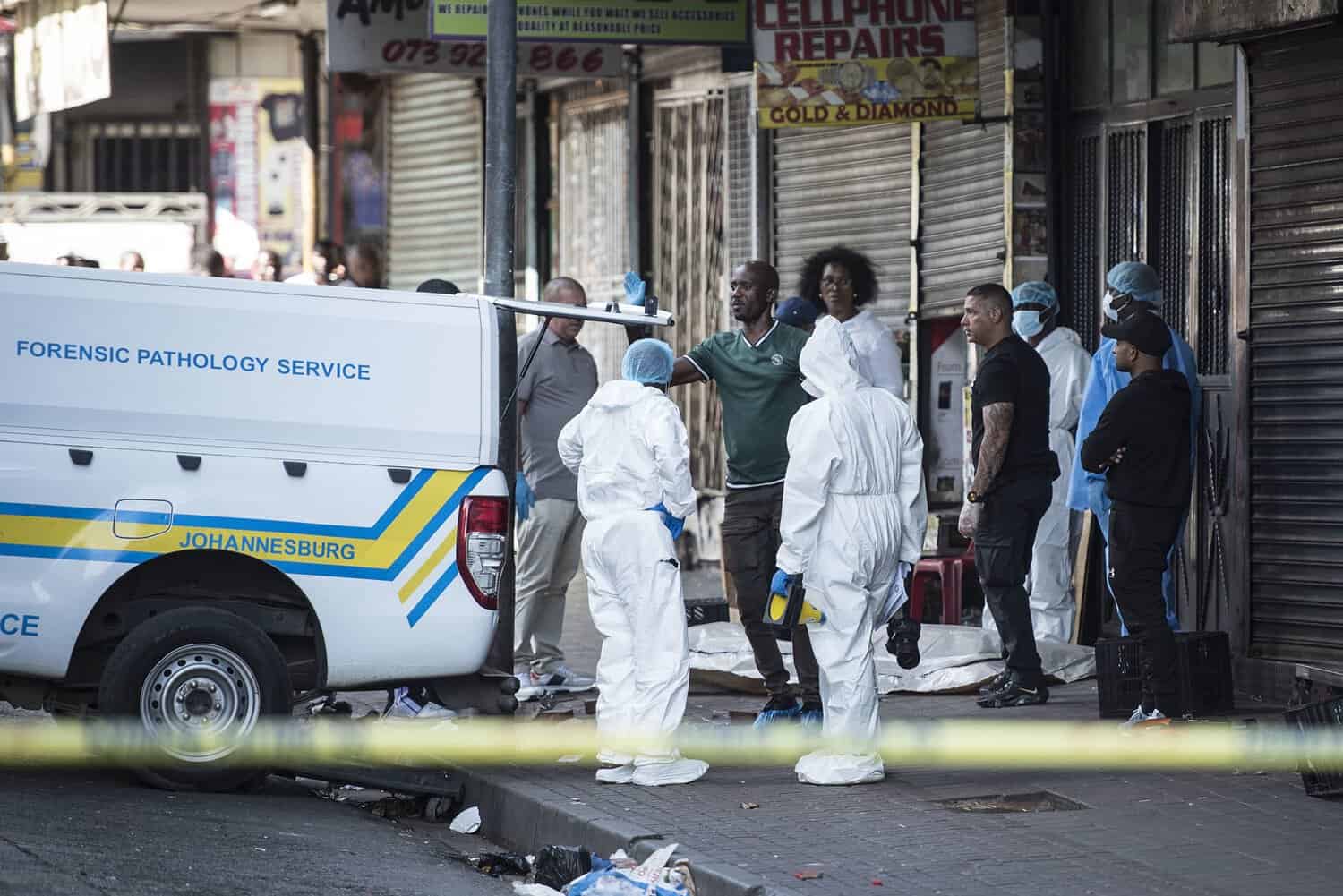
South Africans have become accustomed to bad news.
Visit casino-promo.biz for more information.
Open a newspaper, switch on the TV, scroll through social media or join a conversation around a braai, and the message is often the same: the country is falling apart.
Crime is out of control. The state has collapsed. Things are getting worse every year.
Given the crime that many South Africans encounter, witness or hear about, these fears are understandable.
Crime remains one of the country’s most serious challenges. Too many people still live behind walls, security gates and electric fences.
Too many families have lost loved ones to violence. Too many communities experience fear as a part of everyday life.
But there is an important distinction between recognising a problem and misdiagnosing it.
The question is not whether South Africa has a crime problem, but whether it is experiencing an unstoppable slide into collapse, or whether the reality is more complicated. The evidence suggests it is.
One of the biggest mistakes we make when discussing crime is we often confuse numbers with trends.
Every time crime statistics are released, attention focuses on the total number.
If the number rises, many people assume things must be getting worse.
But South Africa has around 20 million more people than it did at the dawn of democracy.
A country of more than 63 million will naturally record more incidents of almost every social phenomenon than a country of around 43 million people.
This is why serious analysis relies on rates rather than raw numbers.
The question is not simply how many crimes occurred, but what is the likelihood an average South African will become a victim of crime? When we examine crime in this way, the picture changes considerably.
Take murder, the crime that most profoundly shapes public perceptions of safety.
South Africa’s murder rate remains far too high. No responsible observer should attempt to minimise this reality.
But the long-term trend tells very different story from the one often heard in public debate. In the mid-1990s, South Africa’s murder rate stood at about 67 murders per 100 000 people.
Today it is around 44 per 100 000. This is still an unacceptably high figure by global standards, but it is materially lower than the level inherited at the start of democracy.
The same pattern appears in several other major crime categories. Serious assault rates have fallen dramatically over the past three decades and are now roughly half of what they were in the mid-1990s.
Residential burglary rates are substantially lower. Theft out of motor vehicles, once a defining feature of urban insecurity, has also declined markedly.
This does not mean that South Africa is becoming a safe society.
It means the popular narrative of uninterrupted decline is not supported by the evidence.
The reality is both more encouraging and more demanding than that.
The evidence points to a country that made significant progress during the first decade and a half of democracy, lost momentum during a period of institutional weakening and is now experiencing a mixture of strain, stagnation and partial recovery.
In other words, South Africa’s crime story is not one of collapse, it is a story of gains made, gains lost and gains that can be made again.
There is one important exception. Aggravated robbery remains stubbornly resistant to improvement. Unlike several other crime categories, it has not shown the same long-term decline. This is one of the reasons why so many South Africans continue to feel vulnerable.
Violent robberies are highly visible, deeply traumatic, often receive extensive media coverage and shape public perceptions in ways statistics cannot.
But even here, perspective matters.
The existence of a serious problem does not automatically prove the existence of a collapsing state.
Indeed, some of the strongest evidence against the collapse narrative comes not from crime itself, but from the institutions tasked with combating it.
South Africa’s policing system is under strain. Few would dispute this. Police resources have often failed to keep pace with population growth.
Communities regularly complain about slow response times, inadequate investigations and visible shortages of personnel.
But a strained institution is not the same thing as a failed institution.
Since 1994, South Africa has added roughly 20 million people to its population.
Any state would struggle to maintain service levels under such demographic pressure.
The number of people served by each police officer has risen from about 367 to around 414, reflecting a police service under strain.
But despite this pressure, the long-term crime trends remain better than many South Africans realise.
Murder rates are significantly lower than at the dawn of democracy, while serious assault, residential burglary and theft out of motor vehicles have all declined materially.
This is not the profile of a state that has collapsed. It is the profile of a state whose capacity has not kept pace with the demands placed upon it.
The police continue to function. Independent oversight bodies continue to investigate misconduct.
Criminal cases continue to be probed and prosecuted. Public safety remains uneven and often inadequate, but the institutional architecture of law enforcement remains intact.
This distinction matters because hopelessness is not a strategy. If South Africa were truly a failed state, then improvement would be impossible.
There would be little point in debating better policies, strengthening institutions or demanding accountability. Failure would be permanent.
But that is not what the evidence shows. It points to a country under pressure, not a country beyond repair.
Perhaps the greatest danger facing South Africa today is not crime itself, but the belief that crime can never be reduced. History tells us otherwise.
SA has reduced violent crime before and improved policing outcomes before. SA has strengthened institutions before. None of these achievements were perfect or permanent, but they demonstrate something important: progress is possible.
This does not require blind optimism. South Africans have every right to be frustrated by crime. They have every right to demand better from government, police leadership and the criminal justice system.
What they do not need is despair masquerading as analysis.
A country under strain is not the same as a country in collapse. If we want to solve the crime problem, we must begin by understanding it as it is, not as our fears imagine it to be.