Islamabad’s Terror Stamp: How Pakistan Is Criminalising PoK’s Grassroots Rights Movement
· Free Press Journal
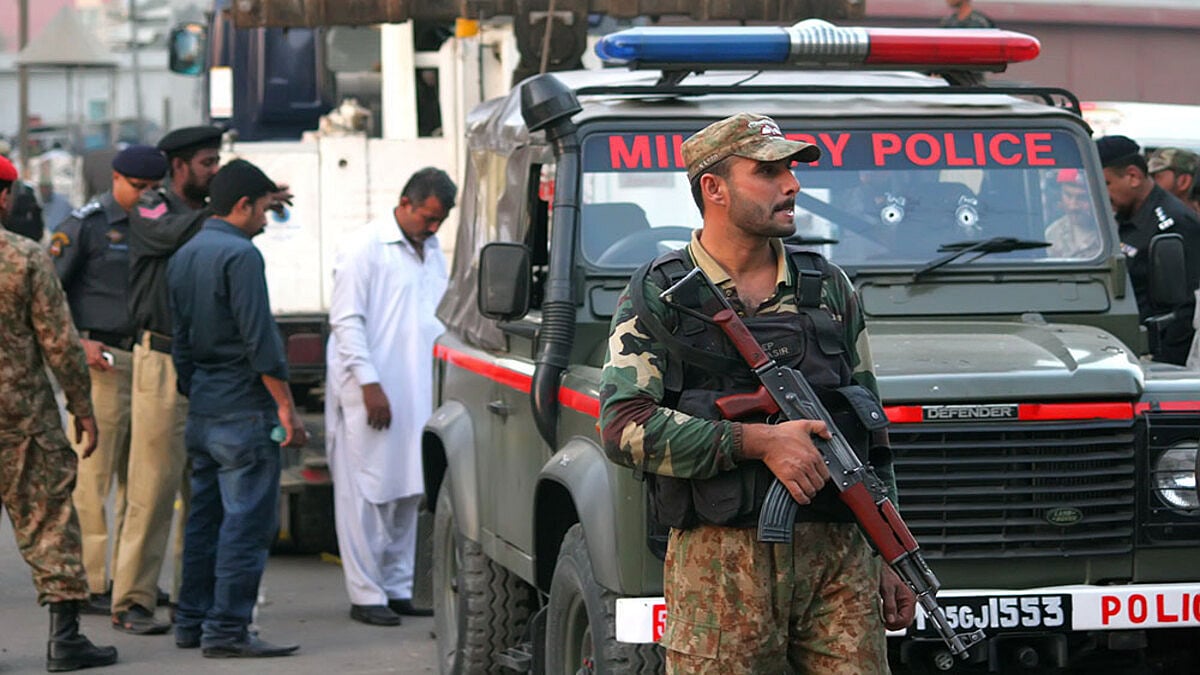
Tensions in Pakistan-occupied Kashmir (PoK) have reached a critical flashpoint ahead of a scheduled regionwide lockdown. Fierce clashes between local rights demonstrators and security forces have left multiple people dead and dozens injured, prompting Islamabad to apply a 'terrorist' label to a major grassroots civil-society coalition.
What is the current crisis in PoK?
Visit turconews.click for more information.
The immediate spark for the latest round of violence occurred in Rawalakot, where local residents and activists engaged in fierce confrontations with law enforcement agencies. The clashes erupted following the death of a local trader, who was allegedly shot during an earlier confrontation with law enforcers.
When riot police arrived to disperse protestors staging a sit-in outside the Combined Military Hospital (CMH) in Rawalakot, the situation turned violent as security forces resorted to baton charges and fired tear gas shells. According to a Dawn report, the violence resulted in the deaths of at least four police personnel and two civilian protestors, with dozens of others severely injured.
In an effort to control the narrative and stop information from leaking out of the region, the Pakistani government immediately shut down mobile data and internet services across major areas. It also deployed heavy contingents of the Pakistan Federal Police and paramilitary Pakistan Rangers to the capital city of Muzaffarabad.
Who is the group leading the protests?
The demonstrations are organised under the banner of the Jammu Kashmir Joint Awami Action Committee (JAAC). Formed as a cross-regional body in mid-2023, the JAAC is not a military or terrorist outfit. It is a grassroots civil-society coalition comprising local traders, transporters, lawyers, students and civic groups.
The movement originally gained momentum from localised actions against severe inflation and shortages such as a sustained sit-in over the soaring price of wheat flour in Rawalakot. Over the past few years, the JAAC has successfully channelled fragmented, local economic grievances into a highly organised, state-wide political force capable of mobilising thousands of ordinary citizens, including women and children.
What are the demands of the common people?
The JAAC movement is driven by a comprehensive 38-point charter of demands aimed at basic governance, economic survival and long-term structural reforms. The demands are split into two primary categories targeting immediate economic relief and long-term structural changes.
In terms of economic relief, residents demand that power tariffs be calculated based on the actual production cost of electricity generated from local hydro-projects such as the Mangla Dam. Locals argue that they bear the ecological and geographical costs of these mega-dams while their electricity is exported to mainland Pakistan, only to be sold back to them at inflated luxury rates. They are also demanding heavily subsidised wheat flour prices equivalent to those provided in neighbouring Gilgit-Baltistan.
On the structural side, the movement insists on ending the expensive perks, luxury vehicles and official privileges enjoyed by top bureaucrats and politicians in Muzaffarabad. Most contentiously, ahead of the scheduled July 27 legislative elections, the JAAC has strictly demanded the abolition of 12 seats in the regional Legislative Assembly that are reserved for 1947 refugees settled inside mainland Pakistani provinces like Punjab and Sindh.
The JAAC points out that these seats are routinely manipulated by mainstream Pakistani political parties to engineer elections and impose handpicked puppet governments in Muzaffarabad completely undermining local self-governance.
Why Islamabad has branded civil dissidents as 'terrorists'
Days before a major state-wide shutter-down and wheel-jam strike scheduled for June 9, 2026, the Pakistani establishment branded the civil coalition a terrorist group, claiming that it was 'creating anarchy' and acting in a manner 'prejudicial to peace and security.'
This labelling allows the state to use maximum military force to suppress ordinary citizens under the guise of counter-terrorism. By framing economic dissent and electoral demands as terrorism, Islamabad avoids addressing the structural exploitation of PoK’s natural wealth. While the Pakistani state has occasionally offered temporary financial subsidies to cool down public anger—such as a Rs 23 billion package in 2024—it draws a firm line against structural reforms that threaten its political patronage network or diminish its tight constitutional control over the region.
The family of the slain trader in Rawalakot has openly refused to bury his body until the terrorism notification against the JAAC is rescinded.
A puppet judiciary
The judicial apparatus has largely mirrored the rigid stance of the state. In an advisory opinion issued by the regional Supreme Court, Chief Justice Raja Saeed Akram Khan ruled that any fundamental amendment to the interim constitution such as the removal of the 12 refugee seats cannot be 'wrested from a government under duress' or through popular agitation.
Where is the situation heading next?
The crisis is reaching a critical breaking point. The JAAC has issued a firm call for an indefinite, state-wide lockdown, shutter-down strike and a long march toward the capital starting June 9, 2026. The residents are stockpilling essential food and medical supplies for at least a month, signaling that the common people of PoK are preparing for a protracted struggle against Pakistani security forces to secure their fundamental rights.