Marco Rubio's Kolkata Stop Signals A Recalibration In India–US Ties
· Free Press Journal
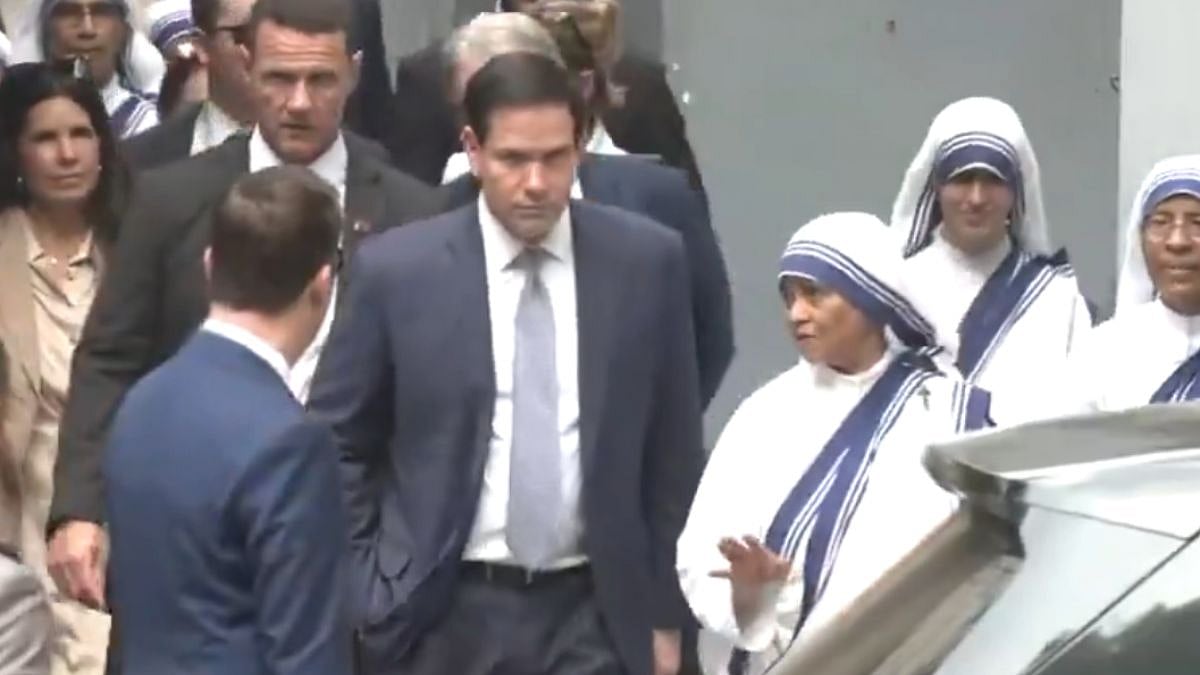
When US Secretary of State Marco Rubio chose to begin his India visit not in New Delhi but in Kolkata, the decision initially appeared deeply personal; some could even call it “spiritual”. After all, Rubio travelled directly to the headquarters of the Missionaries of Charity to pray at the tomb of Mother Teresa before heading to the capital for talks with Prime Minister Narendra Modi and senior Indian officials.
Visit somethingsdifferent.biz for more information.
Undoubtedly, both India’s diplomatic establishment and the sisters of the order were surprised by his choice of the stopover. However, everyone knows that in international politics, symbolism is rarely accidental. This realisation had virtually everyone trying to read the tea leaves to make sense of the visit, which comes soon after the summit between US President Donald Trump and Chinese leader Xi Jinping earlier this month.
At one level, the visit reflected Rubio’s own Catholic faith. Within the contemporary Republican ecosystem shaped by President Donald Trump and the broader MAGA movement, religious identity has become an increasingly potent political language. Mother Teresa remains not merely a saintly figure associated with Kolkata but a globally recognised Catholic icon.
Images of Rubio paying respects at her tomb resonate strongly with conservative Christian constituencies in the United States, reinforcing a political persona rooted in faith, morality, and civilisational symbolism. And for an ambitious politician eyeing the top chair in the White House, cultivating the MAGA and Catholic constituencies is important.
Nevertheless, reducing the Kolkata visit to a mere domestic political theatre would miss its larger strategic context.
Rubio arrived in India at a moment of visible strain in the bilateral relationship. Over the past year, India-US ties have faced friction over trade tariffs, tighter American visa regimes, and growing unease in New Delhi about Washington’s reliability as a balancing power in the Indo-Pacific.
American outreach to Pakistan’s military establishment after the elections, alongside Washington’s simultaneous attempts to stabilise relations with China, has sharpened Indian anxieties about strategic consistency.
For New Delhi, the core concern is no longer whether the United States values India, but whether India occupies a central or merely instrumental place in Washington’s global strategy.
Policymakers on Raisina Hill continue to work on possible scenarios where the US, instead of depending on Asian allies to contain China, does a deal with China, which leaves Asian powers like India, Vietnam, Indonesia, and Japan, which have reason to fear the rise of China, struggling to adjust to new realities in a fast-changing world.
Against that backdrop, Rubio’s messaging during the visit was carefully calibrated. He reiterated that the partnership with India extended “not just in the Indo-Pacific but globally”, signalling an attempt to reassure New Delhi that the relationship remains strategically important despite tactical divergences.
The structural irritants remain formidable. Trade negotiations continue to face political resistance on both sides. India remains wary of overdependence on American security guarantees, while Washington remains frustrated with India’s refusal to align fully with Western positions on Russia, Iran, and global sanctions regimes. India, for its part, continues to pursue what it calls “strategic autonomy”, maintaining relations simultaneously with the United States, Russia, Iran, and the Gulf monarchies.
Seen through these lenses, Rubio’s choice of Kolkata acquires a second, less discussed meaning.
Historically, India’s gateway to the East, Kolkata occupies a critical position, overlooking the Bay of Bengal—a maritime space increasingly central to great-power competition involving India, China, and the United States. Though the city’s commercial port has declined over decades due to silting and infrastructural neglect, eastern India remains strategically vital to New Delhi’s Act East policy and to wider Indo-Pacific calculations.
In Washington’s reckoning, the Bay of Bengal is emerging as a key strategic corridor, linking the Indian Ocean to the Malacca Strait and onwards to the Pacific. As the Quad framework involving India, Japan, Australia, and the United States seeks greater operational coherence, America’s interest in India’s eastern seaboard has deepened considerably.
Energy security adds another dimension. Global energy markets remain volatile amid continuing tensions in West Asia and uncertainty surrounding Iran. The United States is keen to expand oil and liquefied natural gas exports to India, both to reduce India’s dependence on Russian energy and to strengthen Washington’s influence within South Asia’s evolving energy architecture.
Geography again matters here, as India sits astride two critical maritime arteries—one linking the Arabian Sea to the Strait of Hormuz and the Suez Canal, and another connecting the Bay of Bengal to the Strait of Malacca. In scenarios where instability in West Asia threatens traditional shipping routes, eastern maritime access gains additional strategic value, particularly as discussions grow around Arctic-linked commercial corridors reaching Asia.
There may also have been a quieter political message embedded within Rubio’s itinerary. Conservative circles in Washington have increasingly criticised India’s tightening regulations under the Foreign Contribution Regulation Act (FCRA), arguing that restrictions on foreign funding have disproportionately affected church-linked charities and civil society organisations.
Whether Rubio raised the issue privately remains unclear, but the symbolism of beginning his India visit at the Missionaries of Charity headquarters will not have gone unnoticed in either Washington or New Delhi.
Ultimately, Rubio’s Kolkata stop was less about nostalgia or faith than about layered strategic communication. It reassured multiple audiences simultaneously: conservative voters in America, Indian policymakers wary of US commitment, and regional partners watching the evolving geometry of Indo-Pacific politics.
Whether those signals translate into substantive policy shifts is another matter entirely. For now, the visit underscored a central reality of contemporary India-US relations—that of a partnership which remains indispensable for both sides.
However, analysts in New Delhi cannot but come to the conclusion that this relationship is also increasingly transactional, contested, and shaped by overlapping anxieties rather than uncomplicated convergence.
The author is Editor, United News of India.