Cannes 2026: Nepali writer-director Abinash Bikram Shah’s 'Elephants In The Fog' Puts the Third Gender In Focus
· Free Press Journal
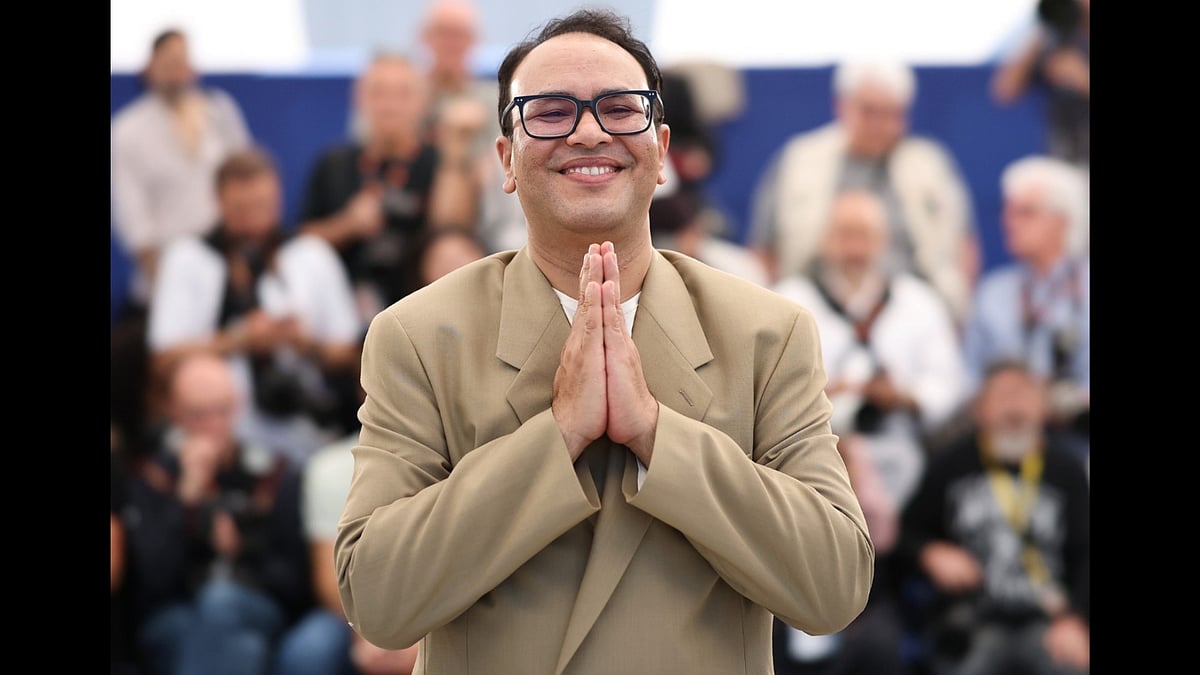
Nepali writer-director Abinash Bikram Shah brought the world of the kinner (third gender) community to Cannes and spoke about blind men, elephants, and the courage it takes to truly see another human being. Elephants in the Fog secured the Un Certain Regard Jury Prize at the Cannes Film Festival 2026, becoming the first Nepali film to win an award at the festival.
The afternoon sun had been shining brightly over the terrace of the main theatre at the 79th Cannes International Film Festival, where, unhurried, a little lost in thought, and slightly apart from the festival's relentless buzz, Abinash Bikram Shah, the Nepali writer-director whose film Elephants in the Fog had just premiered, carried the quiet, watchful quality of a man who listened more than he spoke. Abinash had been writing scripts since 2012. His first, a screenplay for Deepak Rauniyar's Highway, had made it to the Berlinale. But directing? That had been a different beast altogether, one he approached slowly, carefully, and with no small amount of self-doubt.
Visit somethingsdifferent.biz for more information.
“I directed a short film in between that didn't do quite well,” he had said, with the refreshing honesty of someone unbothered by appearances. “It went to Busan, but not the European festivals. I thought maybe I'm just not good at directing.” But then came Lori, his short film that made it to the Cannes competition, and something shifted. “When it came to compete for the Palme d'Or, I felt okay, I can direct,” he had laughed.
In between, he wrote Min Bahadur Bham's Kalopati (Venice) and co-wrote the celebrated Shambhala (Berlinale). His pen had taken him to the world's great festivals. Now his camera had followed.
Like many of the best stories, this one had an unlikely origin: a smartphone, a pandemic, and a late-night scroll. “It was 2020, during the lockdown,” Abinash had recalled. “I was avoiding the horrible COVID news and just scrolling through my phone. And I found these TikTok videos of women from the kinner community — such fun, joyful videos. But the comments below them were so harsh. The contrast hit me hard.”
When restrictions eased, he drove out to meet them — not with a script, not with a pitch, just with curiosity. What he found became the emotional core of the film. “I saw them as a family. A chosen family. A mother-daughter relationship. That was the spark.”
In South Asia, the kinner and hijra communities had occupied a strange, uncomfortable space in the public imagination — feared, mocked, fetishised, and pitied, but rarely simply seen. I had asked Abinash whether they were guarded when he first arrived.
“They invited me for dinner on the very first visit,” he had smiled. “Paneer and chaap. I think not many people like me walk up to their homes just to meet them. They were welcoming, but of course there was also the suspicion: is this filmmaker going to profit off our story? That was there. It took time to break through that.”
Two years of meetings followed before a single frame was shot. And through those two years, he watched Pushpa Thing Lama, who would go on to play the lead role of Pireti, slowly and quietly grow into the character. “She didn't need to act,” he had said softly. “She just needed to let herself be seen.”
“One of the mothers told me the story of the blind men and the elephant,” he had begun while explaining the title of the film. “Six blind men, each touching a different part — the trunk, the leg, the tail. Each convinced they know the truth. But none can see the whole. The mother in the community said that is how Nepali and South Asian society sees us. Either we are kinners with spiritual powers to bless and curse, or we are sex workers, or we are NGO workers. They put us in one box. They never see us as full human beings.”
“And then there's the other contradiction — we have Ganesha, the elephant god, whom we worship. But when real elephants come out of the forest into human spaces, we drive them away with fear. And all along, it is we who have invaded their space. So my job,” Abinash had added, almost to himself, “was to bring the elephant out of the fog.”
The film was shot in Thuri, a village near Chitwan National Park, close to the Indian border. The landscape breathed through every frame — dense, a little wild, quietly magnificent. Even the songs in the film carried that earthy, Bhojpuri-inflected quality of the Terai region.
Pushpa had jumped in here, animated and warm. The songs, she said, were created collectively — the cast and crew sitting together, building words, testing rhythms, guided by their music teacher Naresh Gajurel.
“Every single word was discussed,” she had said, with evident pride. “We wanted each word to mean something, to feel true. It took a long time and a lot of hard work, but that's just the reality of what we built together.”
Pushpa had no traditional acting background. When she described the process of preparing for her role, there was a raw honesty that felt quite moving. “On my first day, I didn't sleep the night before. The character felt so difficult. Abinash kept saying: Pireti, Pireti, Pireti; be Pireti. I thought, how do I do this? How do I make it real?”
Workshops helped. So did dialogue writer Sandeepji, whose easy, natural writing gave them room to breathe and even improvise. “The dialogues in the script — we changed them too. And Abinash never said a word against it,” she had laughed. “He just said: do what feels true to the scene.”
Abinash had nodded. “Nobody read the full script. I only gave them the scenario of each scene. We rehearsed, we pulled from their real experiences. The process was about bringing it out of them, not putting something in.”
Towards the end of our conversation, I had asked them both: in a country and a region where the third gender was slowly gaining recognition, how far could they go?
Pushpa didn't hesitate. Her voice took on a different register — still warm, but with a quiet steel beneath it. “We are human beings too. If you give us equal opportunity, if you put us in the right places, the right way, we can do so much. You don't have to trust us with words. Just give us the chance, and we will show you.”
She gestured around the Palais, the cameras, the whole improbable circus of Cannes. “Look where we are standing today."