Zuma’s power shift: MK party reconfigured under new liberation institute
· Citizen
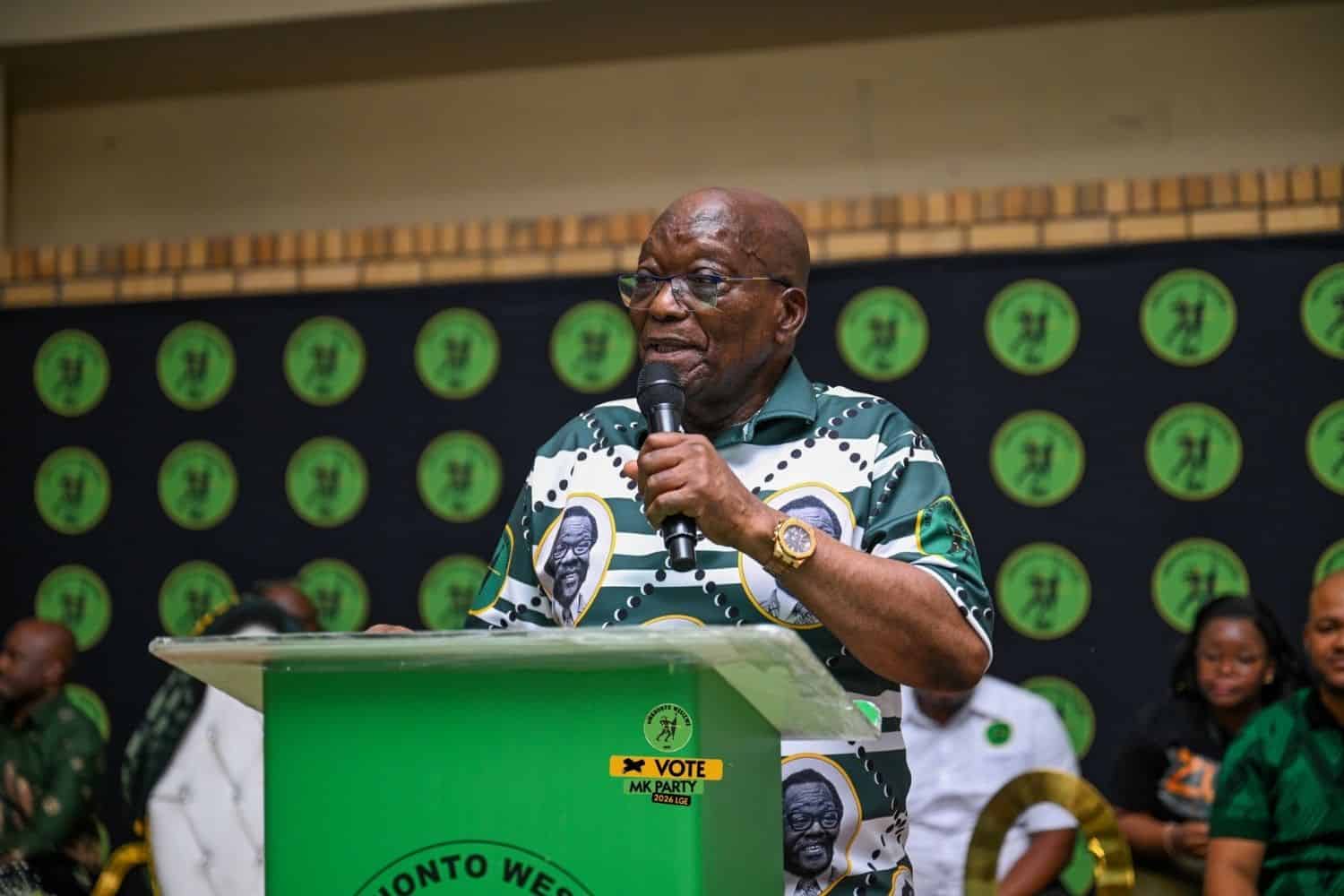
In a decisive move, MK party leader and former president Jacob Zuma has announced a sweeping reconfiguration of the movement, anchored by the establishment of a powerful new Institute to spearhead its ideological, strategic, and organisational agenda.
The party outlined the details at a press briefing on Saturday in KwaZulu‑Natal. According to the party, the announcement follows an intensive 18‑month assessment of the party’s health and direction.
Visit extonnews.click for more information.
Electoral politics
Zuma said the assessment was sanctioned to evaluate the movement’s organisational health, ideological coherence, strategic direction, philosophical orientation, and long-term trajectory since its emergence.
Zuma concluded that conventional electoral politics has become a weak mobilising force, and that true transformation must be driven by liberation as the engine, with politics serving only as the vehicle.
Shake-up
The shake‑up includes the disbanding of the party’s National High Command and the creation of a new MK Party Institute that will oversee the movement’s political and organisational direction.
The Institute, led by Deputy President Dr. Mandlakayise Hlophe and senior party figures such as spokesperson Nhlamulo Ndhlela, General Manana, Oupa Mathebula, Dr Khanyisile Litchfield‑Tshabalala and Lindelani Mbambo, will oversee governance frameworks, leadership structures, and ideological education, while benchmarking global models and African schools of thought.
“All party structures will now report directly to the Institute, which will manage continuity, discipline, and strategic coherence during the reconfiguration process,” Zuma said. He added: “Liberation must be the engine of transformation, while politics becomes only the vehicle.”
‘Liberation’
The MK party’s programme prioritises liberation of the poorest, community activism, African identity restoration, constitutional transformation, and long‑term consciousness.
Zuma stressed: “The MK party believes that South Africa requires a new constitutional conversation rooted in the aspirations, history, traditions, values, and indigenous consciousness of African people. The liberation of our people cannot continue to be governed solely through the current Constitution, which has inherited Roman‑Dutch and English legal traditions that do not fully reflect the civilizational realities and aspirations of the African majority.”
He continued: “The establishment of The Institute aims to perpetuate a new ideology that seeks to liberate Black people based on a dichotomy of policies that the former liberation movement, the ANC, has failed to implement, and will further conscientize our people.”
‘Ntuversalism’
During the briefing, Zuma reaffirmed his commitment to Ntuversalism-a philosophy of Bantu and uMuntu consciousness, dignity, and sovereignty-set to be launched on 28 May 2026 in Johannesburg.
“We must never lose our identity, dignity, traditions, spirituality, and culture as indigenous African people,” Zuma said. “Even when faced with those who came to our land in an effort to indigenize themselves by crafting their culture on stolen soil.”
The Institute will serve as guardian of this framework, reorganising leadership through a new National Executive Committee and deploying task teams to strengthen grassroots mobilisation.
‘Threats’
Spokesperson Nhlamulo Ndhlela said the assessment study also identified serious internal and external threats confronting the movement, including infiltration, factionalism, power mongering, opportunism, and position‑based politics aimed at destabilising the liberation mission that the ANC has abandoned.
“The MK Party will not allow the revolutionary aspirations of the people to be undermined by careerism, internal sabotage, or elite political interests,” Ndhlela said.
“As part of the strategic reorganisation process, President Zuma announces that the MK Party Institute will immediately lead the identification and formation of a new National Executive Committee, formerly disbanding what was known as the National High Command.”
Elections
Positioning itself for both the 2026 local elections and national power in 2029, the party plans to establish community contact centres, activist formations, and policy conferences to advance its liberation agenda.
“The MK Party further reaffirms that while Africans are one people, the illegality that threatens the sovereignty, security, and stability of any state cannot be tolerated. African unity and sovereignty must coexist with lawfulness, order, accountability, and mutual respect among nations and peoples,” Ndhlela said.
Rejecting factionalism, careerism, and elite capture, Zuma called for unity among workers, youth, women, traditional leaders, and civic structures to advance sovereignty, dignity, and African restoration-declaring that with the MK Party, “victory is certain.”
The new structures will focus heavily on preparing for the 2026 local government elections and the 2029 national elections through grassroots mobilisation, activism, and community‑based campaigns.