Gold, Oil Prices Getting Set In UK, Not Middle East, Is Odd
· Free Press Journal
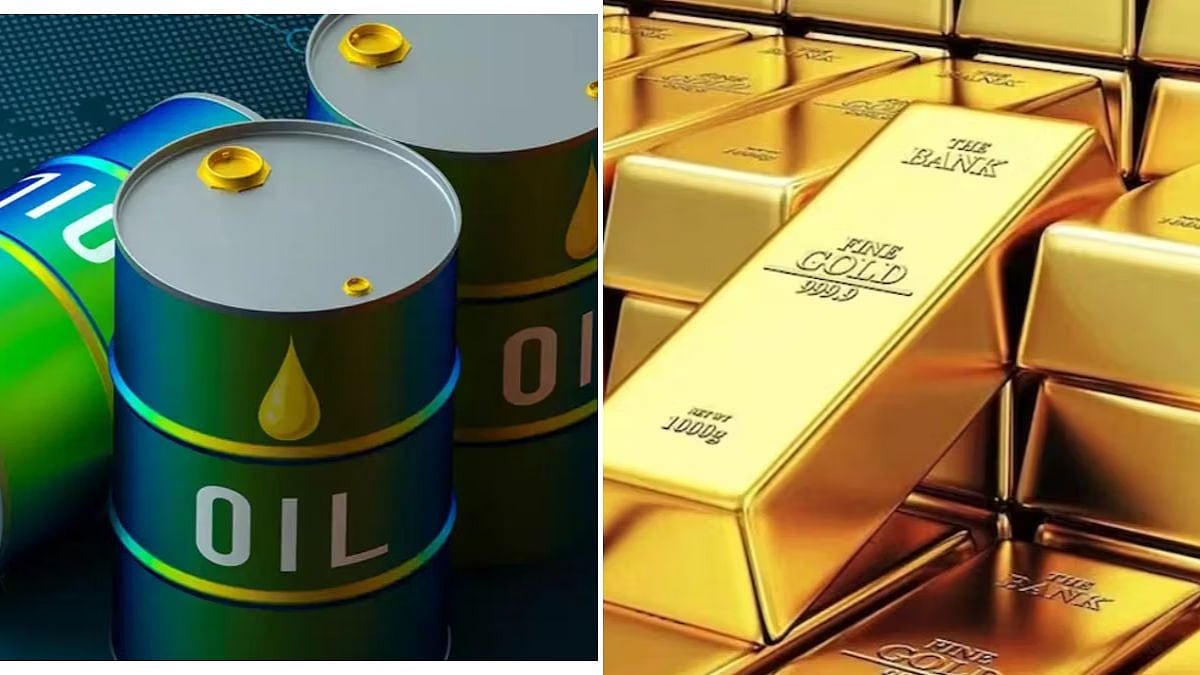
War or peacetime, oil prices are not discovered at their major production centres, namely, the Middle East, but at their speculation centres in London, which has a thriving derivatives market for Brent crude oil. Brent establishes the price for approximately 80% of globally traded petroleum, particularly for Atlantic-basin grades, although the region contributes a declining share of less than 1% of the overall global output. That it is benchmarked for the Middle East oil, with a suitable reduction for its inferior quality vis-à-vis the sweet Brent oil, doesn’t disabuse this seeming and palpable oddity. Come to think of it, the actual Brent, Forties, Oseberg, Ekofisk, and Troll (BFOET) fields that constitute the benchmark are a small subset of the over 100 million barrels per day (mb/d) of the total global liquid fuel production (expected to be around 106.3 mb/d in 2025).
The world sets store by the Brent prices apparently because Brent acts as a transparent, liquid, and financially driven global benchmark, whereas Middle Eastern oil is largely sold through opaque, long-term bilateral contracts. London provides a mature and stable financial infrastructure with open, high-volume futures trading on the ICE exchange, reflecting immediate market sentiment and risk, unlike regional production centres. London's ICE Futures Europe is the primary venue for trading Brent, attracting global speculators, hedge funds, and commercials, which creates high liquidity and transparent, minute-by-minute pricing. This is the refrain of the market fundamentalists, which is uncomfortably true as the ongoing hostilities in the Middle East prove. Another refrain is Brent is "light" (low density) and "sweet" (low sulphur), making it easier and cheaper to refine into petrol and diesel. Located in the North Sea, it is conveniently located for European markets. That may be so, but how can the price discovery there be extrapolated as the global price for the remaining 99% of the global production? That Middle Eastern producers often sell directly to refineries under long-term contracts, which do not offer an immediate public price discovery of a future exchange, seems to be the only convincing explanation that cries out for OPEC getting into the act immediately. The world, as it is, has cynically resigned itself to the fact that while the Middle East is the largest production centre, the financialisation of oil markets means the price is determined where it is most actively traded, not necessarily where it is pumped!!
Visit afrikasportnews.co.za for more information.
Tehran Submits 14-Point Counter-Proposal To US Through Pakistani Intermediary To End Regional ConflictThe crude oil price discovery alone doesn’t strike as odd. London also determines gold prices for the entire world primarily because it is the world's largest hub for trading and storing, rather than producing, gold. The London Bullion Market Association (LBMA) sets the global benchmark through massive, highly liquid, and regulated over-the-counter (OTC) trading of existing gold, establishing the "spot price" twice daily. London has been the focal point of the global gold trade since the 19th century, serving as the central clearing house for international shipments and transactions. But unlike crude oil, London boasts the world’s largest accumulation of gold in secure vaults, allowing for rapid, high-volume trading and settlement. That such accumulation was facilitated by the plunder of South African gold in the last century in league with the US and Switzerland need not detain us for the nonce. The LBMA uses electronic auctions, held twice daily, to set a standard price (the "Fix") that is used worldwide for contracts, jewellery pricing, and central bank transactions. Much of the daily trade involves unallocated or "paper" gold, making the physical location of mines less relevant than the proximity to global banks and investors. That said, while London sets the spot price, it works alongside the NYC COMEX and the Shanghai Gold Exchange, meaning the global price reflects international sentiment and supply/demand rather than just local production. While London is the primary fixing centre, the daily spot price is driven by global macroeconomic factors, such as currency movements, inflation, and investor demand, not by physical production in the UK.
Thus, it is abundantly clear that both the yellow metal and liquid gold, or crude oil, are under the thrall of speculators, although, unlike oil, the prices of which are extrapolated on the basis of North Sea oil prices, gold prices reflect global availability. Both are depleting resources. To be sure, global gold production is generally increasing, with mined production reaching record highs in 2025 (3,672 tonnes) and expected to grow further in 2026 due to higher output from Canada and Africa. The scarcity value of the metal is the driving force behind its surging prices besides the safe haven factor. While production is increasing marginally, some analysts suggest the industry is approaching a long-term production peak, as new major discoveries become rare. In other words, despite current records, experts believe mining production is plateauing rather than growing aggressively, as easy-to-find reserves are depleted. Besides mining, recycled gold supply also saw an 11% rise in 2024, contributing to the total supply, notes the World Gold Council. Oil, however, is not capable of being recycled, which is why its depletion could be a cause for concern unless fresh reserves are discovered.
Based on current production rates and known economically feasible reserves, the world’s crude oil is expected to last for approximately 47 to 50 years. This widely quoted estimate changes slowly because as we consume oil, new technology and discoveries continuously update the total of known reserves. While substitutes for oil, especially for vehicular energy, have been a source of relief, gold remains tantalisingly beyond the pale of substitutes, which is why both central banks of the world as well as households are piling up gold ravenously.
While the role of the speculators in London for the discovery of prices for both the commodities is undeniable, there could be a sense of unease that the world is dancing to the tunes of the three major financial centres of the world, namely, London, New York, and Zurich, though none of them produce an iota of either commodity. The long-term bilateral contracts between major oil producers and major consumers, including India and China, are the only saving grace which is lost to the electronic media, which unwittingly flutters the dovecotes of the common folks. India should set store by such long-term contracts with Iran (once peace returns), Russia, and others in the neighbourhood rather than incurring substantial transportation and insurance expenses inevitable in importing from the US and Venezuela.
S Murlidharan is a freelance columnist and writes on economics, business, legal and taxation issues.