BIS Convenes National Workshop to Shape India’s AI & Robotics Standards Roadmap
· Free Press Journal
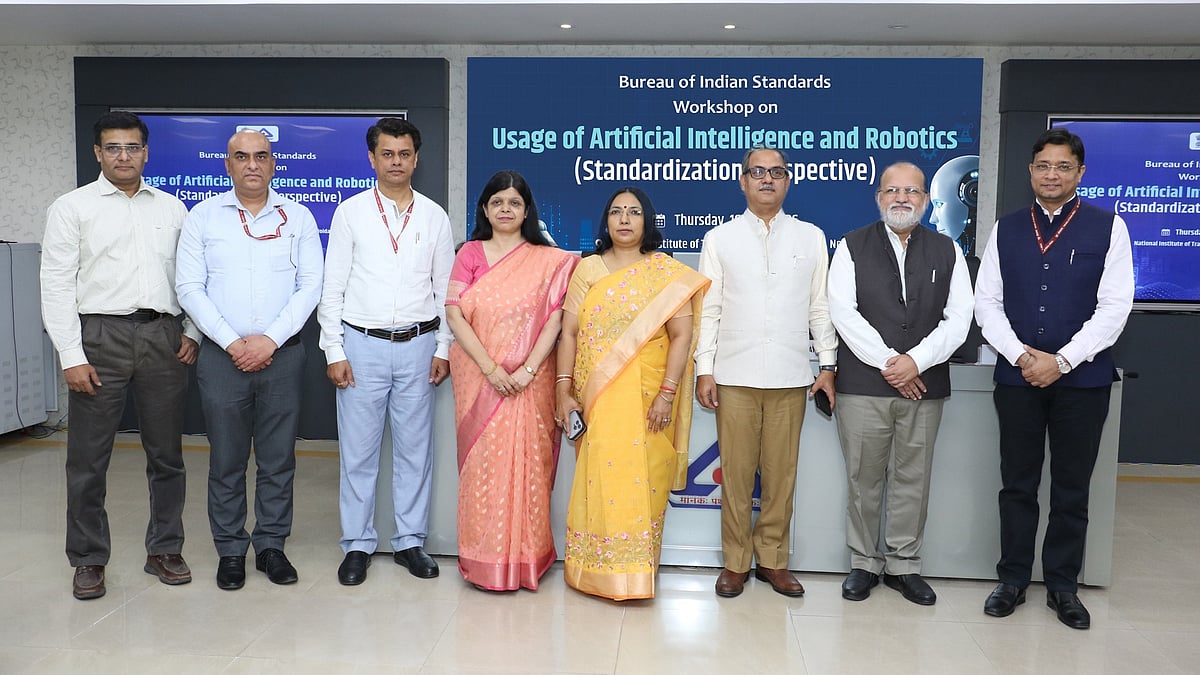
In a significant step towards shaping India’s regulatory and quality framework for emerging technologies, the Bureau of Indian Standards (BIS), under the Department of Consumer Affairs, Government of India, today convened a one day national workshop on “Usage of Artificial Intelligence and Robotics: Standardization Perspective” at the National Institute of Training for Standardization (NITS), Noida.
Visit lej.life for more information.
Bringing together policymakers, industry leaders, academia, and technology experts, the workshop aimed to review the current status of Indian Standards in Robotics and Artificial Intelligence, strengthen synergies between government, industry and academia for standards development and adoption, and formulate a concrete roadmap for standards formulation in emerging robotics and AI applications.
Leadership Underscores Urgency of Responsible AI Frameworks
The workshop was inaugurated by Smt. Nidhi Khare, Secretary, Department of Consumer Affairs, who highlighted the urgency of building trust-led and globally aligned standards frameworks for emerging technologies. She underscored that “Today, everyone is engaging with products and services powered by AI and Robotics, reflecting their transformative impact on our lives. It is imperative that we proactively explore their meaningful integration into public governance. She encouraged BIS scientists to lead with vision in developing standards and forward-looking frameworks, because if we do not take the lead, others certainly will.”
Delivering the keynote, Sanjay Garg, Director General, BIS, emphasized the strategic role of standardisation, "In the rapidly evolving domains of AI and Robotics, standards serve as the strategic cornerstone for national competitiveness. Our commitment to robust standardization ensures that Indian innovation is not only synonymous with excellence but is also positioned as a primary driver of international norms and technical benchmarks."
Addressing the gathering, Smt. Reena Garg, Scientist-G & DDG (Standardization-I) highlighted, “As AI and Robotics rapidly transform sectors from agriculture to manufacturing, India must lead with standards that ensure safety, transparency, and inclusivity, while enabling innovation.”
Sanjay Pant, Scientist-G & DDG (Standardization -II) underscored that “India is not just advancing AI and robotics standards, we are actively shaping them at the global level. With over 100 standards already developed across AI, big data, and robotics, our focus now is clear: to bridge gaps, strengthen real-world applications, and ensure these technologies serve humanity safely, ethically, and at scale.”
Jitender Kumar, Head of Electronics & IT department of BIS highlighted about Human Centric Standardization of AI & Robotics ensuring trust, safety and psychological acceptance considering the vast economical, socio-cultural diversity across India. He emphasized the need to formulate an indigenous standard addressing these issues as a key takeaway of the workshop.
The workshop featured expert presentations and deliberations on responsible deployment of AI and Robotics, human-centric and ethical standardization, sectoral applications including agriculture and manufacturing, regulatory frameworks, and the status and future roadmap of Indian Standards.
A panel discussion on “Standards as the Backbone of Responsible Robotics and AI Adoption in India — Are We Ready?” was also held to debate India’s readiness for large-scale adoption. The workshop marks a significant step forward in India’s national progress towards institutionalizing standards for emerging technologies, underscoring the important role of quality, safety, and ethical frameworks in driving sustainable and innovation-led growth in these emerging areas.
Key outcomes of the workshop include:
• A formal Workshop and Panel Outcome Statement capturing agreed positions on AI and Robotics standardization
• A prioritized list of critical gaps in existing Indian Standards requiring immediate attention
• Strengthened collaboration between leading academic institutions, industry bodies, and BIS
These outcomes collectively lay a strong foundation for a cohesive, future-ready, and globally competitive standards ecosystem in AI and Robotics in India.