Flights resume at LaGuardia as probe into deadly crash continues
· Toronto Sun
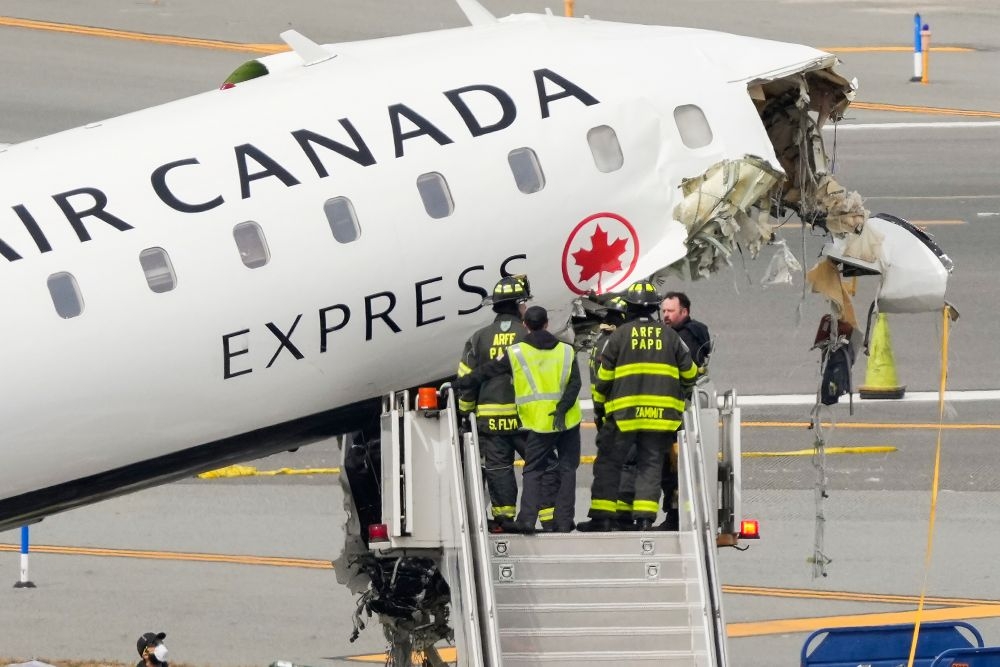
As the U.S. National Transportation Safety Board (NTSB) continues to sift through the wreckage of Sunday’s deadly aircraft collision at LaGuardia, one aviation crash expert says investigators can’t afford to leave any stone unturned.
LaGuardia Airport, one of numerous busy airports in the congested airspace above New York City, sat idle for much of the week after Jazz Flight 8646 collided with an airport fire truck just seconds after touching down, killing the two Canadian pilots and injuring scores more.
Visit michezonews.co.za for more information.
Meanwhile, operations at LaGuardia are slowly returning to normal — with the first flight to depart LGA since Sunday night, Delta 988, taking off at 2:30 p.m. Wednesday en route to Atlanta.
Kevin Durkin, lead aviation law attorney at Chicago-based Clifford Law Offices, told the Toronto Sun investigators need to look at all factors that could have led to Sunday’s deadly collision.
“We don’t know from the cockpit voice recorder what (the pilots) knew or didn’t know before they landed,” he said.
“In any type of case like this, you need to look at everything.”
Doomed pilots only had 20 seconds to react
On Tuesday, NTSB officials shared a brief transcript of flight 8646’s final three minutes before the collision.
Audio captured by the recorder showed LaGuardia’s tower controller giving flight 8646 clearance to land on Runway 04 about two minutes and 17 seconds before the collision — but less than 20 seconds before the crash, the same controller gave an airport fire truck clearance to cross the runway, directly in the path of the landing Jazz airliner.
NTSB chair Jennifer Homendy said Tuesday that only two controllers were in the LaGuardia control tower at the time of the crash — standard procedure for American airports during the overnight shift.
That controller, she said, signed in for his shift at 10:45 p.m. Sunday night, about an hour before the deadly crash, and was scheduled to work until 6:45 a.m. the next morning.
The second person in the tower was the controller-in-charge, tasked with ensuring overall safety — but Homendy said that person was also doubling as the shift’s clearance delivery controller.
She said it wasn’t clear which of the two were also acting as ground controller, responsible for ensuring the safe travel of aircraft between the runways and terminal, as well as all service vehicles on the ground.
Runway incursions growing problem
Runway incursions are an increasing problem across North America, with Canada’s Transportation Safety Board (TSB) saying they’ve kept a close eye on the problem since 2010.
Despite new technology meant to curb the problem — including runway status lights and electronic systems like ASDE-X (Airport Surface Detection Equipment, model X) surveillance equipment and ADS-B position tracking — the TSB recorded 639 runway incursions in 2024.
That’s the most ever recorded in the 15 years, the TSB says — 73 more than 2023.
While such prevention systems were in place at LaGuardia, Homendy said on Tuesday that the fire truck wasn’t equipped with an ATS-B transponder, nor did the airport’s ASDE-X system report any conflict.
“ASDE-X did not generate an alert due to the close proximity of vehicles merging and unmerging near the runway, resulting in the inability to create a track of high confidence,” Homedy said, reading directly from the system’s analysis summary.
As well, CCTV video of the crash appear to indicate the runway status lights, a series of ground-mounted lamps that indicate an occupied runway, were indeed functioning properly.