Nvidia Unveils AI Platform, DLSS 5, Predicts $1 Trillion Revenue: All Things Jensen Huang Announced During The GTC Keynote 2026
· Free Press Journal
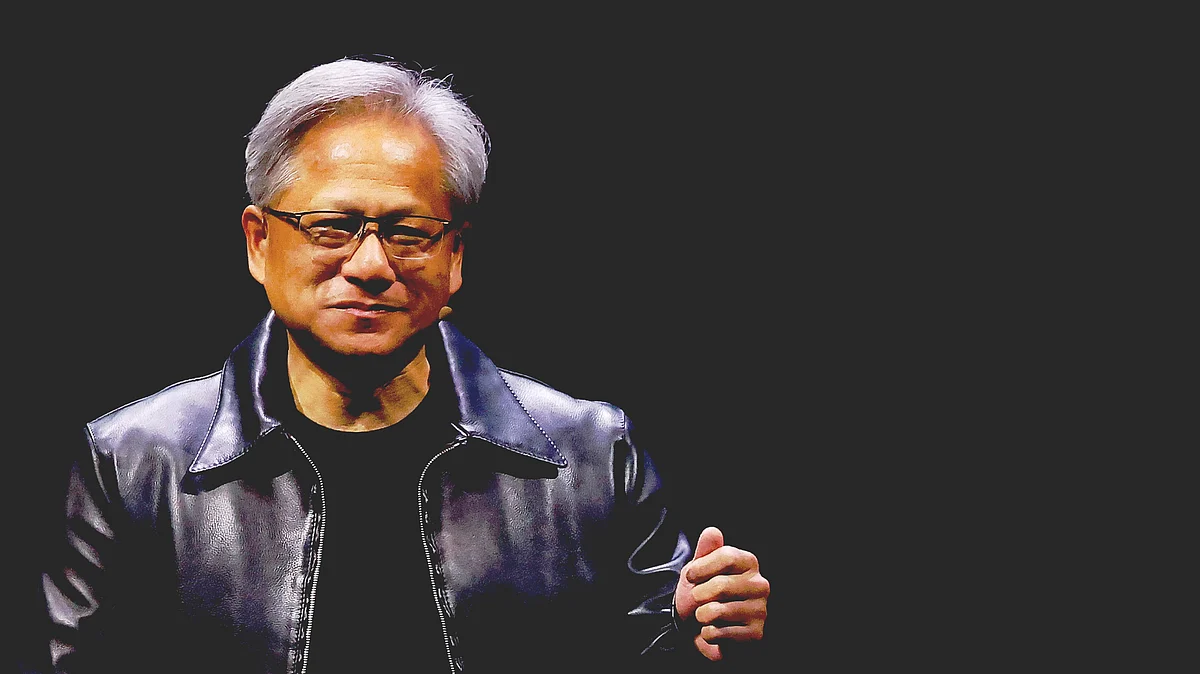
Jensen Huang took the stage at the SAP Center in San Jose on March 16 to deliver Nvidia's GTC 2026 keynote to a crowd of over 30,000 developers from 190 countries. In a presentation that ran over two hours, Huang covered new chips, a next-generation computing platform, a landmark graphics breakthrough, an AI agent operating system, a space data center, and a bold trillion-dollar revenue forecast. Here is every major announcement, broken down.
Visit asg-reflektory.pl for more information.
Vera Rubin: Nvidia's New Full-Stack AI Computing Platform
The centrepiece of the keynote was the official rollout of the Vera Rubin platform. Vera Rubin is a new full-stack computing platform comprising seven chips, five rack-scale systems and one supercomputer for agentic AI. The platform includes the new Nvidia Vera CPU and BlueField-4 STX storage architecture. The Vera Rubin NVL72 delivers 3.6 exaflops of compute and 260 TB/s of all-to-all NVLink bandwidth. Huang also unveiled Rubin Ultra, a more powerful configuration - Rubin Ultra can connect up to 144 GPUs and is described as "the new NVLink."
DLSS 5: The 'GPT Moment' for real-time graphics
One of the most talked-about reveals at the show was DLSS 5. Unlike previous versions of DLSS that focused on AI upsampling or frame generation, DLSS 5 introduces a "Real-Time Neural Rendering" core architecture for the first time, directly generating complete pixels with lighting and material interactions through end-to-end trained AI models. Huang called it "the most significant breakthrough in computer graphics since real-time ray tracing in 2018." More than 30 games - including Assassin's Creed Shadows, Starfield, Naraka: Bladepoint and Where Winds Meet - will be among the first to complete adaptation this autumn.
NemoClaw: An enterprise-grade operating system for AI agents
Huang announced NemoClaw as Nvidia's answer to the agentic AI movement. Nvidia NemoClaw is an open source stack that simplifies running always-on OpenClaw assistants more safely and with a single command. It installs the NVIDIA OpenShell runtime, part of the NVIDIA Agent Toolkit, a secure environment for running autonomous agents, and open source models like NVIDIA Nemotron. Huang drew a direct analogy between NemoClaw and operating systems of the past, comparing its potential impact to what Windows did for personal computers.
Groq 3 LPX Rack: 35x more throughput per megawatt
A landmark partnership was formalised on stage. The Groq 3 LPX rack will hold 256 LPUs and is meant to sit beside the Vera Rubin rack-scale system shipping to customers later this year. Huang said the Groq LPX rack can increase the tokens per watt performance of its Rubin GPUs by 35 times. Huang described the pairing as uniting "two processors of extreme differences - one for high throughput, one for low latency."
Nemotron 3 Super: Nvidia's flagship Open AI model
Launched at GTC 2026, Nvidia Nemotron 3 Super is a 120-billion-parameter open model with 12 billion active parameters, designed to run complex agentic AI systems at scale. It uses a hybrid mixture-of-experts architecture that delivers up to 5x higher throughput and up to 2x higher accuracy than the previous Nemotron Super model. It also features a 1-million-token context window, allowing agents to retain full workflow state in memory and prevent goal drift.
The Nemotron Coalition: Building open frontier models together
Nvidia also announced a broader push around open model development. Nvidia is expanding its open model ecosystem with a new Nemotron Coalition, rallying partners around six frontier model families: Nvidia Nemotron (language and reasoning), NVIDIA Cosmos (world and vision), Nvidia Isaac GR00T (general-purpose robotics), Nvidia Alpaymayo (autonomous driving), NVIDIA BioNeMo (biology and chemistry) and Nvidia Earth-2 (weather and climate). Partners in the coalition include companies like Perplexity, Mistral, Black Forest Labs and Cursor.
Physical AI and Robotics: BYD, Hyundai, Nissan, and Uber
Huang dedicated significant time to physical AI and autonomous vehicles. Huang's robotaxi-ready platform is drawing new automaker partners, including BYD, Hyundai, Nissan and Geely. He also highlighted a partnership with Uber to deploy these vehicles into its ride-hailing network. The Uber fleet, powered by Nvidia's Drive AV software, is planned to launch across 28 cities in four continents by 2028, starting with Los Angeles and San Francisco. Nvidia also showcased 110 robots at GTC, underscoring its growing footprint in industrial robotics, with partners including ABB, Universal Robots and KUKA.
Vera Rubin Space-1: A Data Centre in Orbit
In one of the keynote's more unexpected announcements, Huang said the goal is to start data centres in space with Vera Rubin Space-1, noting complications around radiation that Nvidia's engineers are actively working through. Few technical details were shared, but Huang confirmed Nvidia has a dedicated engineering team working on the project.
Feynman: The Architecture Beyond Vera Rubin
Looking further ahead, Nvidia's next major architecture after Vera Rubin is Feynman. It will include a new CPU called NVIDIA Rosa, named for Rosalind Franklin, whose X-ray crystallography revealed the structure of DNA. The Feynman generation also includes LP40, Nvidia's next-generation LPU, paired with BlueField-5 and CX10. Huang said the Feynman generation advances every pillar of the AI factory: compute, memory, storage, networking and security. No launch date was given.
The $1 trillion forecast
Huang closed with a landmark revenue projection. Nvidia said it previously saw about $500 billion of high-confidence demand and purchase orders for Blackwell and Rubin through 2026. Huang revised that dramatically upward, saying he now sees at least $1 trillion in revenue from 2025 through 2027. Nvidia shares rose about 2% on the day of the keynote.