A Quiet Death That Speaks Volumes
· Free Press Journal
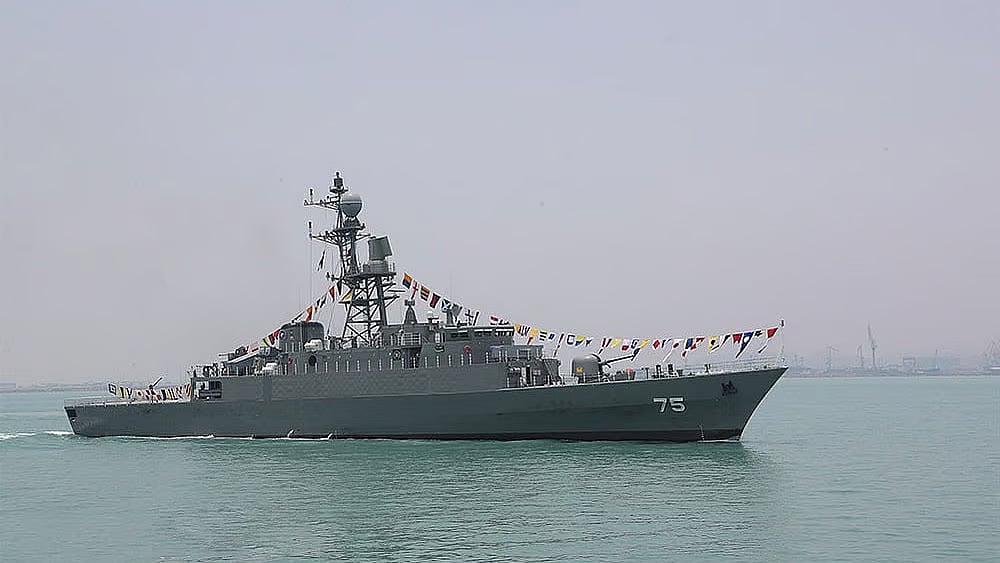
The "quiet death" of the Iranian frigate IRIS Dena, dispatched by an American torpedo just about forty-four nautical miles off the coast of Sri Lanka on Wednesday, blows a submarine-sized hole into India’s long-held aspirations for naval primacy in the Indian Ocean. For years, New Delhi has positioned itself as the "net security provider" for the region, yet the ability of an extra-regional power to execute a high-stakes kinetic strike within India’s primary littoral zone—and immediately following the high-profile MILAN 2026 exercises—dents somewhat the illusion of Indian dominance. The conflict between the United States and Iran inadvertently exposes New Delhi to criticism regarding its regional stewardship and undermines the notion of strategic autonomy, as India finds itself a bystander to a clash between the United States and a former energy supplier. The Dena having been struck also compromises somewhat the perception of India’s ability to guarantee the safety of regional waters, particularly as the vessel was a state guest in Visakhapatnam shortly before the attack. Furthermore, this act risks fostering a normalisation of external military activism, signalling to other global powers, specifically China, that the Indian Ocean is an open theatre for unilateral operations where Indian sovereignty and regional influence can be challenged with impunity.
To salvage its blue-water ambitions, the Indian Navy must quickly draw the correct inference from this subsurface engagement by prioritising underwater domain awareness. The fact that a US submarine could manoeuvre and strike undetected could well point to a critical gap in India’s current anti-submarine warfare (ASW) capabilities. If India cannot secure its own backyard against "quiet" threats, its claim to be a credible "blue water" force floats in the realm of claim alone. True blue water capacity is not merely about carrier battle groups and port visits; it is about the sustained ability to detect, deter, and deny unauthorised kinetic actions by foreign actors within one's strategic sphere. The incident inadvertently exposes New Delhi to criticism for its reactive posture, necessitating a transition to active enforcement through heavy investment in long-range maritime patrol aircraft, advanced sonar networks, and autonomous underwater vehicles. Only by closing the gap between geopolitical rhetoric and technical ASW proficiency can India prevent its littoral waters from becoming a playground for foreign superpowers, ensuring that the next "quiet death" does not occur as a result of national incapacity.
Visit milkshakeslot.lat for more information.